- 1Key Takeaways
- 2What Is an IATA Accredited Travel Agency?
- 3Why Become an IATA Accredited Travel Agency?
- 4IATA vs. IATAN vs. ARC vs. TIDS: Which Do You Need?
- 5The 6 Steps to Become an IATA Accredited Travel Agency
- Step 1: Choose Your Accreditation Type
- Step 2: Register Your Business and Meet Eligibility
- Step 3: Gather Your Required Documents
- Step 4: Complete the Application
- Step 5: Submit and Pay the Fees
- Step 6: Receive Your IATA Number and Maintain Accreditation
- 6The Shortcut: Getting an IATA Number for Travel Agency Startups via a Host Agency
- 7How Much Does It Cost to Become an IATA Accredited Travel Agency?
- 8How to Get IATA Number for Travel Agency Approval
- 9What Is an IATA Number for Travel Agency Owners?
- 10Do You Need to Be an IATA Certified Travel Agency?
- 11How Long Does IATA Accreditation Take?
- 12IATA Accreditation Requirements: What You'll Need
- 13Should You Get Your Own Accreditation or Use a Host Agency?
- 14Common IATA Accreditation Mistakes to Avoid
- 15Frequently Asked Questions
- 16Final Thoughts and Your Accreditation Checklist
IATA Accredited Travel Agency: 6 Simple Steps to Get Approved in 2026
An IATA accredited travel agency holds a unique IATA number to book travel and earn commissions. Here are 6 simple steps to get approved in 2026.

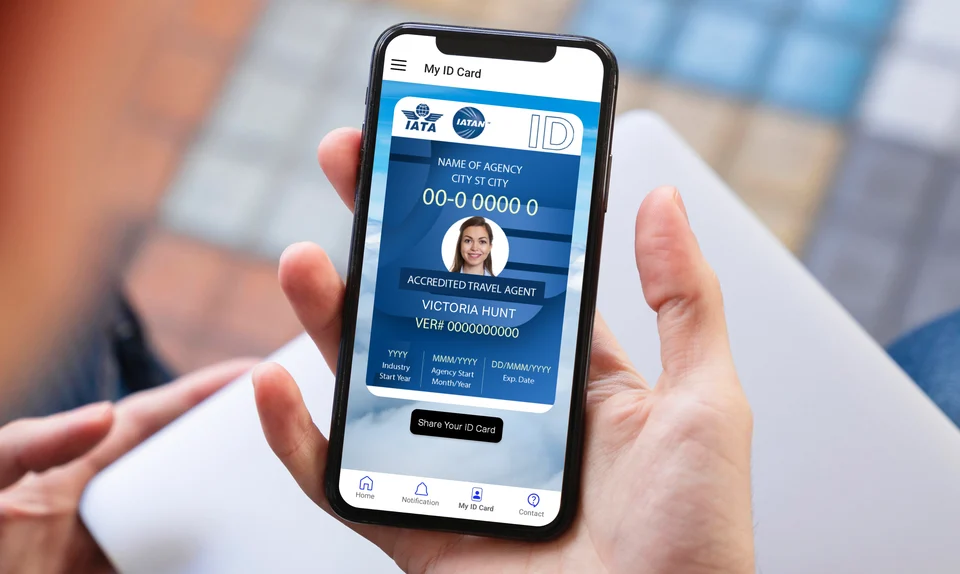
An IATA accredited travel agency is a travel business officially recognized by the International Air Transport Association, holding a unique IATA numeric code that lets it book travel and earn commissions from airlines and suppliers. To become one, you register your business, choose your accreditation type, gather documents, apply, pay the fees, and receive your code — 6 simple steps we walk through below.
That's the short answer. Below, we explain exactly what an IATA accredited travel agency is, the difference between IATA, IATAN, and ARC, the 6 steps to get approved, the costs, and the faster host-agency shortcut most new advisors use. If you want the credential that unlocks commissions and supplier access, this guide shows you how.
Key Takeaways
An IATA accredited travel agency holds a unique IATA numeric code (7–8 digits) to book travel and earn commissions.
IATA serves agencies outside the US; IATAN is the US arm — and US air ticketing also needs ARC.
IATAN accreditation costs about $247 for a head office, plus a ~$103 annual fee, with ~30-day processing.
The E&O insurance requirement is waived if you have 2 years' experience or an approved certification.
The fastest route is a host agency — you use their IATA number for your travel agency with no experience requirement or application fee.
An IATA number is not the same as an IATA card — the number accredits the agency; the card is a personal ID for producing advisors.
What Is an IATA Accredited Travel Agency?
An IATA accredited travel agency is a travel business that has been officially vetted and recognized by the International Air Transport Association (IATA), the body representing about 290 airlines across 117 countries. Once accredited, the agency receives a unique IATA numeric code — a 7- or 8-digit identifier that lets it book travel, issue tickets (with the right accreditation type), and earn commissions from airlines, hotels, cruise lines, and car rental companies.
A few core terms defined up front, since we'll use them throughout:
IATA (International Air Transport Association) is the global airline body that accredits travel agencies outside the US.
An IATA number (or IATA numeric code) is the unique code that identifies an accredited agency to suppliers.
IATAN (International Airlines Travel Agent Network) is IATA's US accreditation program.
ARC (Airlines Reporting Corporation) is the US ticketing and settlement hub — the US equivalent of IATA's BSP.
BSP (Billing and Settlement Plan) handles payments between agencies and airlines outside the US.
TIDS (Travel Industry Designator Service) is a free IATA code for non-ticketing intermediaries.
A host agency is an established agency whose IATA number you can book under.
E&O insurance (Errors and Omissions) covers professional mistakes.
A GDS (Global Distribution System) is the platform agencies use to access supplier inventory.
An IATA card is a personal ID credential for producing travel advisors.
With the vocabulary set, let's look at why this credential matters.
Why Become an IATA Accredited Travel Agency?
Becoming an IATA accredited travel agency unlocks the core capabilities that make a travel business viable: the ability to book across suppliers and earn commissions. According to IATA, being recognized by airlines gives agencies easier access to facilities including ticketing authority, payment flexibility, and exclusive offers. In our experience helping advisors get set up, the IATA number is the credential suppliers look for first — it effectively signals that you're a vetted, legitimate professional worth paying commission to.
Here's what an IATA accredited travel agency gains:
Commission eligibility — suppliers use your IATA number to identify and pay you.
Supplier and GDS access — book airlines, hotels, cruises, and cars directly.
Credibility — accreditation signals you've passed a thorough vetting process.
Ticketing authority — with air ticketing accreditation (plus ARC in the US), you can issue tickets directly.
Higher margins — direct airline access can lift flight margins meaningfully versus using middlemen.
Industry listing — your agency appears on the IATA CheckACode and Agency List for suppliers to verify.
The opportunity behind this is enormous — the World Travel & Tourism Council forecasts Travel & Tourism to contribute $12 trillion globally in 2026. As the American Society of Travel Advisors emphasizes, professional credentials are central to operating credibly in this market. An IATA number is the most widely recognized of those credentials — which is exactly why it's worth understanding how to get one.
IATA vs. IATAN vs. ARC vs. TIDS: Which Do You Need?
Before applying, you need to know which program applies to you, because "IATA accreditation" actually covers several related credentials. Here's the breakdown:
Program | Who it's for | Ticketing? | Cost |
|---|---|---|---|
IATA | Agencies outside the US | Yes (via BSP) | Varies by country |
IATAN | US-based agencies | No (non-ticketing) | ~$247 + ~$103/yr |
ARC | US agencies issuing air tickets | Yes (with IATAN) | Separate application |
TIDS | Non-ticketing intermediaries (global, not US) | No | Free |
The key distinctions: if your agency is outside the US, you apply to IATA directly and settle payments through the BSP. If you're in the US, you apply through IATAN, and if you want to issue flight tickets yourself, you also need ARC accreditation — Fora Travel notes that US agencies need both an IATAN number and ARC to issue tickets directly. TIDS is a free, non-ticketing IATA code available globally (except the US, where IATAN covers it), popular with tour operators and advisors who just need supplier identification. For most US-based advisors who don't issue their own airline tickets, IATAN non-ticketing accreditation — or a host agency — is the right path.
The 6 Steps to Become an IATA Accredited Travel Agency
Here's the full path to accreditation at a glance, then step by step. This describes the US IATAN process; the IATA process outside the US is similar but settles via BSP.
Step | Action |
|---|---|
1 | Choose your accreditation type |
2 | Register your business and meet eligibility |
3 | Gather your required documents |
4 | Complete the application |
5 | Submit and pay the fees |
6 | Receive your IATA number and maintain it |
Step 1: Choose Your Accreditation Type
First, decide which credential fits: IATAN (US, non-ticketing or ticketing), IATA (outside the US), TIDS (free, non-ticketing), or joining a host agency to use their number. For most new US advisors who don't issue their own air tickets, IATAN non-ticketing accreditation is the target — though the host-agency shortcut (covered below) is often faster. Choosing correctly here saves you from gathering documents for the wrong program.
Step 2: Register Your Business and Meet Eligibility
Your business must be legally registered and in good standing. IATAN requires proof of a current business license showing your legal entity is active. For non-ticketing IATAN accreditation, you also need to meet the experience or certification requirement: the E&O insurance requirement is waived if you have 2 years of full-time industry experience in the last decade, or hold an approved certification such as CTA, CMP, CMM, CSEP, or the ASTA Verified Travel Advisor credential.
Step 3: Gather Your Required Documents
This is the paperwork-heavy step. According to IATAN, you'll typically need your business license, proof of E&O insurance (or a qualifying waiver), Seller of Travel registration where applicable (California, Florida, Hawaii, or Washington), and financial documents. For full ticketing accreditation, you'll also provide ARC approval and meet bonding requirements — a minimum $50,000 bond commonly applies for newer agencies. Compiling everything before you apply prevents delays.
Step 4: Complete the Application
Complete and sign the IATAN application form (part of the Accreditation Kit), or apply through the IATA Customer Portal for international IATA accreditation. The kit includes the application form, agency agreement, fee schedule, and requirements list. Fill it in carefully and attach all your supporting documents. Accuracy matters here — incomplete applications are the most common cause of delays.
Step 5: Submit and Pay the Fees
Submit your completed application and documents through the portal or IATAN submission email. Note that with IATAN, payment is only required after your application is approved — the accreditation team contacts you with payment instructions. IATAN accreditation costs about $247 for a head office or branch (more for corporate travel departments), and processing averages 30 days once complete documents are received.
Step 6: Receive Your IATA Number and Maintain Accreditation
Once approved, you receive your unique IATA numeric code, a confirmation letter, and your official Certificate of Accreditation — and your agency is added to the IATA Agency List. From here, maintaining accreditation means paying annual service fees (about $103 for a head office) and completing any required annual revalidation. Congratulations — you're now an IATA accredited travel agency, ready to book and earn commissions.
The Shortcut: Getting an IATA Number for Travel Agency Startups via a Host Agency
Here's what many new advisors don't realize: you don't have to get your own accreditation at all. The fastest, cheapest way to get an IATA number for travel agency operations is to join a host agency and book under their IATA number. As Host Agency Reviews explains, most travel advisors access IATA this way — it's faster, has no experience requirement, and avoids IATAN application fees.
When you join a host agency, you use their established IATA number for travel agency bookings, instantly gaining commission eligibility and supplier access without the months of paperwork and financial vetting that independent accreditation requires. The trade-off is that you operate under the host (often sharing a commission split), rather than holding your own code. For most people starting out, this is the smart move: get selling and earning immediately under a host's number, then pursue your own IATA accreditation later once you've built volume and experience. It's also worth noting an IATA card is not required to use a host's IATA number — the card is simply a personal ID for producing advisors that unlocks travel-agent perks.
How Much Does It Cost to Become an IATA Accredited Travel Agency?
The cost to become an IATA accredited travel agency is moderate, especially compared to the commissions it unlocks. Here's the US (IATAN) fee breakdown:
Item | Approx. cost (2026) |
|---|---|
IATAN accreditation (head office/branch) | ~$247 |
IATAN accreditation (corporate travel dept.) | ~$410 |
Annual service fee (head office) | ~$103 |
Annual service fee (corporate dept.) | ~$184 |
TIDS (non-ticketing, global) | Free |
Host agency route | Monthly/annual host fee |
Beyond these, full air-ticketing accreditation adds ARC costs and a bond (commonly a $50,000 minimum for newer agencies). Outside the US, IATA fees and financial security requirements vary by country. For the complete financial picture of launching, see our guide to travel agency startup costs. The bottom line, in our view: for a solo advisor, the host-agency route costs the least upfront, while independent IATAN accreditation runs a few hundred dollars plus annual fees.
How to Get IATA Number for Travel Agency Approval
To get IATA number for travel agency approval, you either apply directly for accreditation (IATAN in the US, IATA internationally) by completing the six steps above, or you join a host agency and use their number. The direct route means registering your business, meeting the experience or certification requirement, gathering documents, applying, paying fees, and receiving your code in about 30 days.
If you're wondering how to get IATA number for travel agency use as quickly and cheaply as possible, the host-agency route wins — you get commission eligibility and supplier access almost immediately, with no experience requirement or application fee. The direct-accreditation route makes more sense once you have steady booking volume and want full control and 100% of your commissions. Either way, the IATA number is what enables you to earn — see our guide to travel agency commission for how those earnings work.
What Is an IATA Number for Travel Agency Owners?
An IATA number for travel agency owners is a unique 7- or 8-digit code, issued by IATA (or IATAN in the US), that identifies an accredited agency to travel suppliers so it can book travel and receive commissions. Think of it like a business ID within the travel industry — suppliers use it to verify you're legitimate and to route your commission payments correctly.
The IATA number is issued to the agency, and advisors working under that agency (or a host) book using it. It grants access to global distribution systems and signals to airlines, hotels, cruise lines, and car rental companies that you've been vetted. Without an IATA number (or an equivalent like a CLIA number or TIDS), an agency generally can't access most global booking systems or earn standard supplier commissions — which is why it's such an essential credential.
Do You Need to Be an IATA Certified Travel Agency?
You don't strictly need to be an IATA certified travel agency to sell travel, but you need an IATA number — or an equivalent accreditation — to book across suppliers and earn commissions. An IATA certified travel agency can book airline tickets directly (with ticketing accreditation and ARC in the US) and is recognized industry-wide, but alternatives exist for those who don't want their own accreditation.
The alternatives to being a fully IATA certified travel agency include holding a CLIA number (strong for cruise-focused agencies), obtaining TIDS (free, non-ticketing), or — most popular for beginners — joining a host agency that's already accredited. So while becoming an IATA certified travel agency in your own right is the gold standard, you have viable paths to start earning commissions without going through full accreditation immediately.
How Long Does IATA Accreditation Take?
IATA (IATAN) accreditation typically takes about 30 days to process once you've submitted a complete application with all required documents. However, the full timeline is often longer in practice, because gathering the paperwork — business license, insurance, Seller of Travel registration, and financial documents — can take weeks, and any missing items restart the clock.
For international IATA accreditation outside the US, the process can take even longer, sometimes months, given the financial verification and bonding involved. This is another reason the host-agency shortcut is so popular: you can start booking under a host's IATA number almost immediately, rather than waiting out the accreditation process. If you do pursue your own accreditation, preparing every document in advance is the single best way to keep the timeline close to that 30-day minimum.
IATA Accreditation Requirements: What You'll Need
Before applying to become an IATA accredited travel agency, it pays to have every requirement clear, since missing documents are the top cause of delays. Here's what IATAN typically asks for in the US:
Requirement | Detail |
|---|---|
Business license | Active and in good standing |
E&O insurance | Or a waiver (2 years' experience or certification) |
Seller of Travel registration | If in/selling to CA, FL, HI, or WA |
Financial documents | Bank statements, tax filings, revenue proof |
ARC approval | Only required for air ticketing |
Surety bond | Commonly ~$50,000 for ticketing/newer agencies |
Meeting these requirements upfront is what separates a smooth 30-day approval from a months-long back-and-forth. In our experience, the E&O waiver catches people off guard — but it's genuinely helpful, since two years of industry experience or an approved certification (like CTA or ASTA's VTA) removes the insurance requirement entirely. For international IATA accreditation outside the US, expect additional financial verification, a bank guarantee or security deposit for the local BSP, and sometimes a letter of recommendation from an IATA airline or GDS. Whatever your location, compiling a complete document package before you apply is the single most important thing you can do to become an IATA accredited travel agency without delays.
Should You Get Your Own Accreditation or Use a Host Agency?
The biggest strategic decision for most new advisors is whether to become an independently IATA accredited travel agency or simply book under a host agency's number. Both are valid — the right choice depends on where you are in your journey:
Choose a host agency if you're new, want to start earning immediately, prefer lower upfront cost, and don't mind a commission split.
Choose your own accreditation if you have steady booking volume, want to keep 100% of commissions, and value full control and independence.
For beginners, we almost always recommend starting with a host. It removes the experience requirement, the application fee, and the paperwork, letting you focus on selling from day one while still using a legitimate IATA number for travel agency bookings. Then, once you've built a client base and consistent revenue, becoming your own IATA accredited travel agency makes financial sense — the annual fees become trivial against your commission volume, and you gain complete control. Think of it as a progression rather than a one-time choice: host first to start earning, then self-accredit to maximize earnings. Many of the most successful agencies followed exactly this path.
Common IATA Accreditation Mistakes to Avoid
Avoid these errors when becoming an IATA accredited travel agency:
Applying for the wrong program. Confirm whether you need IATA, IATAN, ARC, or TIDS first.
Confusing the IATA number with the IATA card. The number accredits the agency; the card is a personal ID.
Submitting incomplete documents. This is the top cause of delays — compile everything first.
Overlooking Seller of Travel registration. Required for California, Florida, Hawaii, and Washington.
Assuming you must self-accredit immediately. A host agency is often the smarter first step.
Forgetting annual fees and revalidation. Accreditation must be maintained, not just obtained.
Skipping ARC when you need ticketing. US agencies issuing air tickets need both IATAN and ARC.
Avoid these, prepare thoroughly, and your accreditation will go smoothly.
Frequently Asked Questions
What is an IATA accredited travel agency? An IATA accredited travel agency is a travel business officially recognized by the International Air Transport Association, holding a unique IATA numeric code (7–8 digits) that lets it book travel and earn commissions from airlines and suppliers. In the US, this accreditation is handled by IATAN, IATA's US arm.
How do I get an IATA number for my travel agency? You either apply directly for accreditation (IATAN in the US, IATA internationally) by registering your business, meeting the experience or certification requirement, gathering documents, applying, and paying fees — or you join a host agency and book under their IATA number. The host route is fastest, with no experience requirement or application fee.
How much does IATA accreditation cost? IATAN accreditation costs about $247 for a head office or branch (around $410 for a corporate travel department), plus annual service fees of about $103 and $184 respectively. TIDS is free but non-ticketing. Outside the US, IATA fees and financial security requirements vary by country, and full air-ticketing accreditation adds ARC costs and a bond.
What's the difference between IATA, IATAN, and ARC? IATA accredits agencies outside the US and settles payments via the BSP. IATAN is IATA's US accreditation program and issues the same IATA numeric code. ARC is the US ticketing and settlement hub — US agencies that issue flight tickets directly need both IATAN accreditation and ARC.
Do I need to be an IATA certified travel agency to sell travel? Not strictly, but you need an IATA number or an equivalent accreditation to book across suppliers and earn commissions. Alternatives include a CLIA number (great for cruises), free TIDS registration, or joining an already-accredited host agency — the most popular route for beginners.
Is an IATA number the same as an IATA card? No. An IATA number is the code that accredits your agency and enables bookings and commissions. An IATA card is a personal ID credential for producing travel advisors, used to access travel-agent perks like discounted rates and FAM trips. You don't need an IATA card to use your agency's or host's IATA number.
How long does IATA accreditation take? IATAN accreditation typically takes about 30 days to process once you submit a complete application with all required documents. In practice the full timeline is often longer, because gathering paperwork can take weeks and missing items restart the clock. International IATA accreditation can take even longer. The host-agency route lets you start booking almost immediately instead.
Can a home-based travel agent become an IATA accredited travel agency? Yes. IATAN accreditation is available to home-based, storefront, and online travel agencies alike — location doesn't disqualify you, as long as you meet the business-license, experience-or-certification, and documentation requirements. Many home-based advisors, however, start under a host agency to skip the experience requirement and application fee, then pursue their own accreditation as they grow.
Final Thoughts and Your Accreditation Checklist
Becoming an IATA accredited travel agency is the credential that unlocks commissions, supplier access, and industry credibility — and it's more achievable than the paperwork suggests. Here's your quick checklist:
✅ Choose your accreditation type (IATAN, IATA, TIDS, or host)
✅ Register your business and meet eligibility
✅ Gather documents (license, insurance, SOT, financials)
✅ Complete the application
✅ Submit and pay fees (after approval, ~$247 IATAN)
✅ Receive your IATA number and maintain it
For most people starting out, we recommend joining a host agency first to get an IATA number for travel agency bookings immediately, then pursuing your own accreditation once you've built volume. Whichever path you choose, that IATA number is your gateway to earning in this industry.
Once you're accredited and booking, you'll need a system to manage clients, bookings, and commissions. Start your free TravelBoost trial to run your agency in one place — and download our free accreditation checklist. New to the industry? Start with our complete guide on how to start a travel agency.
Want a CRM that's actually built for travel?
Leads, bookings, suppliers, Hajj operations, tours, car rental, finance — all in one platform. Set up in 10 minutes.
Start free 14-day trialWeekly playbook for travel-agency operators
One email a week — product updates, benchmarks, and behind-the-scenes changelog. No spam.