
- 1Key Takeaways
- 2Do You Need Travel Agency Insurance?
- 3What Is Travel Agency Insurance?
- 4The 6 Essential Travel Agency Insurance Policies
- 1. Errors & Omissions (E&O) / Professional Liability
- 2. General Liability
- 3. Cyber Liability
- 4. Business Owner's Policy (BOP)
- 5. Commercial Property
- 6. Workers' Compensation
- 5What Does Travel Agency Insurance Cost in 2026?
- 6What E&O Insurance Does NOT Cover
- 7Where to Buy Travel Agency Insurance
- 8What Is Travel Agency Errors and Omissions Insurance?
- 9How Much Does E&O Insurance for a Travel Agency Cost?
- 10Do Home-Based Travel Agents Need Insurance?
- 11What Travel Agency Insurance Coverage Do You Really Need?
- 12Real-World Travel Agency Insurance Claims
- 13How to Lower Your Travel Agency Insurance Costs
- 14Common Travel Agency Insurance Mistakes to Avoid
- 15Frequently Asked Questions
- 16Final Thoughts and Your Insurance Checklist
Travel Agency Insurance: 6 Essential Policies to Avoid Costly Risk
ravel agency insurance protects you from costly lawsuits and claims. Here are the 6 essential policies — from E&O to cyber liability — every agency needs in 2026.

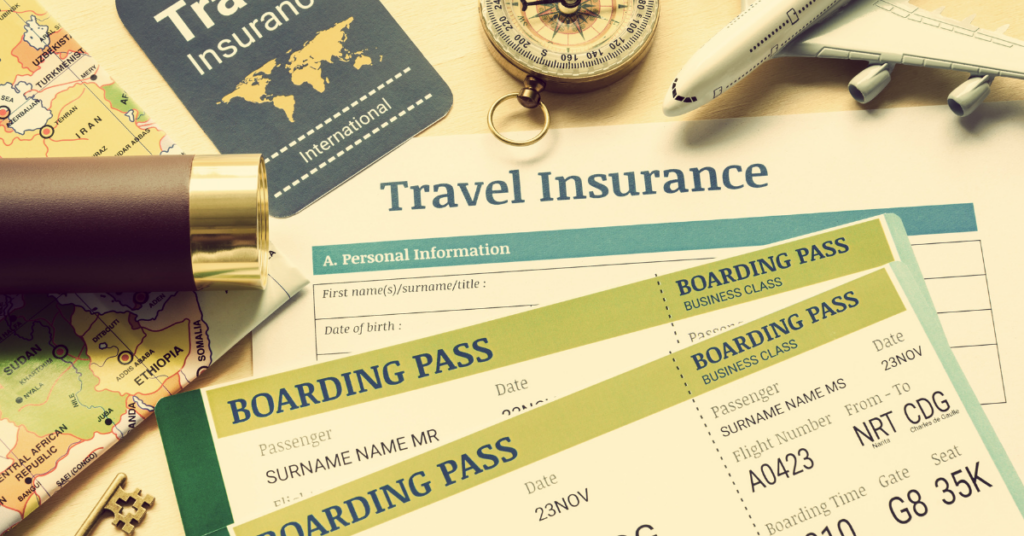
Travel agency insurance protects your business from the financial fallout of lawsuits, mistakes, and disasters — and the 6 essential policies are errors and omissions (E&O), general liability, cyber liability, a business owner's policy, commercial property, and workers' compensation. Together, these shield you from the costly risks every travel business faces.
That's the short answer. Below, we explain what travel agency insurance is, walk through all 6 essential policies, break down real 2026 costs, cover what E&O does not protect, and show where to buy it. If you want to run your agency without one lawsuit wiping you out, this guide is your roadmap. Note: this is educational, not insurance advice — always get quotes and confirm coverage with a licensed insurance professional.
Key Takeaways
The 6 essential policies: E&O, general liability, cyber liability, a business owner's policy, commercial property, and workers' compensation.
E&O is the single most important — it protects you when a client claims a booking mistake cost them money.
E&O averages around $451/year for travel agents, though it ranges from about $150 to $2,150+.
Cyber liability matters more than ever — agencies store passport scans, payment details, and personal data.
Workers' comp is legally mandatory in most states the moment you hire a W-2 employee.
Good documentation lowers your risk — clear records and communication prevent most claims from ever forming.
Do You Need Travel Agency Insurance?
Legally, federal law doesn't mandate travel agency insurance — but that doesn't mean you can skip it. Several states (California, Florida, Washington, and Hawaii) require travel sellers to register and post a bond or proof of financial protection, and workers' compensation becomes mandatory in most states the moment you hire a W-2 employee. Beyond those legal triggers, E&O, general liability, and cyber coverage are increasingly demanded by suppliers and corporate clients in B2B contracts.
More importantly, the practical case is overwhelming. Travel agencies make high-stakes bookings where a single mistake — a wrong date, a missed visa requirement, a booking on the wrong flight — can trigger an expensive lawsuit. As the Insurance Information Institute notes, even a meritless claim costs money to defend, and legal fees alone can cripple a small business. The U.S. Small Business Administration recommends business insurance as core protection for any company. In our experience, travel agency insurance isn't a grudging compliance cost — it's what lets you operate confidently, knowing one bad claim won't end your business. The opportunity is huge (the World Travel & Tourism Council forecasts Travel & Tourism at $12 trillion globally in 2026), and protecting your slice of it is simply smart business.
What Is Travel Agency Insurance?
Travel agency insurance is a set of business insurance policies that protect a travel agency from financial losses due to lawsuits, professional mistakes, property damage, data breaches, and employee injuries. Rather than a single policy, it's a stack of coverages — each addressing a different risk — that together provide comprehensive protection for your agency.
A few core terms defined up front, since we'll use them throughout:
E&O (Errors and Omissions) insurance, also called professional liability, covers claims that your professional mistake cost a client money.
General liability insurance covers third-party bodily injury and property damage.
Cyber liability insurance covers data breaches and cyberattacks.
A business owner's policy (BOP) bundles general liability, property, and business interruption.
Commercial property insurance covers your office, equipment, and contents.
Workers' compensation covers employee work injuries.
Business interruption insurance replaces lost income if you're forced to close temporarily.
An endorsement is an optional add-on that extends a policy's coverage.
A deductible is what you pay out of pocket before insurance kicks in.
PII (personally identifiable information) is sensitive client data like passport and payment details.
With the vocabulary set, here are the 6 essential policies.
The 6 Essential Travel Agency Insurance Policies
Here's the full stack at a glance, then a deep dive into each.
# | Policy | Protects against |
|---|---|---|
1 | Errors & Omissions (E&O) | Booking mistakes, bad advice, negligence claims |
2 | General liability | Client injury, property damage, ad injury |
3 | Cyber liability | Data breaches, hacks, ransomware |
4 | Business owner's policy (BOP) | Bundled liability + property + interruption |
5 | Commercial property | Office, equipment, and contents damage |
6 | Workers' compensation | Employee work injuries |
1. Errors & Omissions (E&O) / Professional Liability
Errors and omissions insurance is the single most important travel agency insurance policy. Also called professional liability, travel agency errors and omissions insurance protects you when a client claims your professional service caused them financial harm — a missed booking, a wrong date, an inaccurate quote, or forgetting to relay a visa or vaccination requirement. It covers your legal defense costs and damages, even when the claim is meritless. Many policies also cover personal injury like libel and slander, and advertising mistakes in your marketing. For any travel advisor, this is the non-negotiable foundation of your coverage.
2. General Liability
General liability insurance (also called commercial general liability) covers third-party bodily injury and property damage. The classic example: a client visits your office on a rainy day, slips, and is injured — general liability covers their medical costs. It also covers advertising injuries, like a competitor claiming your ad campaign harmed them. While this matters most for storefront agencies with foot traffic, it's inexpensive and often bundled into a BOP, making it worthwhile for most agencies.
3. Cyber Liability
Cyber liability insurance has become essential travel agency insurance coverage because agencies handle exactly what hackers want: passport scans, payment details, and personal client data. A single breach can trigger six-figure response costs. Cyber liability covers breach response, client notification, credit monitoring, regulatory fines, and recovery from ransomware or a stolen laptop. It's increasingly required by suppliers and corporate clients, and given how much sensitive data even a solo advisor stores, it's no longer optional for serious agencies.
4. Business Owner's Policy (BOP)
A business owner's policy is a smart-value bundle that combines general liability, commercial property, and business interruption insurance into one policy — usually at a 10–15% discount versus buying them separately. For most small agencies, a BOP is more cost-effective and comprehensive than piecing coverage together. If a fire damages your office and ruins your equipment, a BOP replaces the equipment and covers lost income while you recover. It's often the best-value core of a travel agency insurance stack.
5. Commercial Property
Commercial property insurance protects your office space, furniture, electronics, and equipment against fire, theft, water damage, natural disasters, and vandalism. If it's not already bundled in a BOP, it's worth carrying separately — especially for agencies with a physical storefront or expensive equipment. Even home-based advisors need this as "business contents" coverage, because a standard homeowner's policy won't cover business property or business-related losses.
6. Workers' Compensation
Workers' compensation is mandatory in most US states the moment you hire your first W-2 employee. It covers medical expenses and partial lost wages if an employee is injured on the job — for instance, an assistant who trips and is hurt in your office. Beyond the legal requirement, it protects both your employees and your business from the potentially ruinous cost of a workplace injury claim. If you have any employees, this isn't optional — it's the law.
What Does Travel Agency Insurance Cost in 2026?
The good news: travel agency insurance is affordable relative to the risks it covers. Here's what travel agents typically pay in 2026, based on industry data from insurers like Insureon and The Hartford:
Policy | Average cost |
|---|---|
E&O / professional liability | ~$451/year (~$38/mo) |
General liability | ~$350/year (~$29/mo) |
Cyber liability | ~$1,600/year (varies widely) |
Business owner's policy (BOP) | ~$600/year (~$50/mo) |
Workers' compensation | ~$872/year (~$73/mo) |
Commercial property | Often bundled in BOP |
These are averages — your actual travel agency insurance coverage cost depends on your revenue, services, claims history, location, employee count, and coverage limits. E&O for travel agents commonly runs anywhere from $150 to $2,150+, often priced as a small percentage of your gross sales. Higher-risk bookings (air, cruise, groups, adventure) cost more than simple hotel bookings. You can lower premiums by choosing higher deductibles, bundling policies, and maintaining a clean claims record. For how insurance fits your overall launch budget, see our guide to travel agency startup costs.
What E&O Insurance Does NOT Cover
Understanding the limits of your travel agency insurance is as important as the coverage itself. E&O is powerful, but it has clear exclusions:
E&O typically covers | E&O typically excludes |
|---|---|
Booking and document errors | Bodily injury / property damage (needs general liability) |
Missed updates and omissions | Intentional or fraudulent acts |
Negligence claims | Supplier insolvency (unless endorsed) |
Legal defense costs | Cyber/data breaches (needs cyber liability) |
Libel, slander, ad mistakes | Pandemics (unless endorsed) |
This is exactly why a single policy isn't enough — the exclusions of one policy are covered by another, which is the whole point of a layered stack. Note too that E&O is usually a claims-made policy, meaning you must keep active coverage and preserve your retroactive date to stay protected for past work. When you eventually retire, an extended reporting period (or "tail") keeps you covered for claims filed after you stop. Some agencies also add endorsements for supplier insolvency, independent contractor coverage, or contractual liability required by corporate clients.
Where to Buy Travel Agency Insurance
You can buy travel agency insurance from general business insurers or from carriers that specialize in the travel industry. Specialized providers understand the nuances of travel work and often offer travel-agent-specific E&O. As Host Agency Reviews advises, it's also worth asking your consortia, travel agent associations, or host agency about preferred supplier agreements — these can save you real money.
Commonly cited 2026 providers include Berkshire Hathaway Travel Protection (a long-standing travel-agent E&O reference), Hiscox (flexible online policies well-suited to home-based advisors), The Hartford (business insurance with E&O in a BOP bundle), and NAPA and EOforLess (low-cost E&O for solo agents). Online marketplaces let you compare quotes quickly. In our experience, the smartest approach is to get quotes from at least three providers — including one travel-specialized carrier — and compare coverage, not just price. If you're a hosted advisor, check what E&O coverage your host already provides before buying your own.
What Is Travel Agency Errors and Omissions Insurance?
Travel agency errors and omissions insurance (E&O), also called professional liability insurance, is coverage that protects a travel agency when a client alleges that a professional mistake or omission caused them financial harm. This includes booking the wrong dates, quoting inaccurate prices, failing to relay critical travel requirements, or general negligence in providing travel services — plus the legal defense costs of fighting such claims.
It's considered the single most essential travel agency insurance policy because these professional-service mistakes are the most common and costly risk advisors face. Even when you've done nothing wrong, defending a lawsuit is expensive, and travel agency errors and omissions insurance covers those defense costs. Note that it doesn't cover bodily injury, intentional acts, or cyber incidents — those require other policies — which is why E&O anchors a broader stack rather than standing alone.
How Much Does E&O Insurance for a Travel Agency Cost?
E&O insurance for a travel agency costs an average of around $451 per year (about $38/month), though it commonly ranges from $150 to over $2,150 depending on your business. When comparing e&o insurance travel agency options, expect premiums to hinge on your annual revenue (policies are often priced as a percentage of gross sales), the services you offer, your claims history, your agent count, and your coverage limits.
Higher-risk services — air ticketing, cruises, group and adventure travel — cost more to insure than simple hotel bookings, because they carry more liability. To keep your e&o insurance travel agency premium low, maintain strong documentation, communicate clearly with clients, choose a deductible matched to your risk tolerance, and bundle E&O with cyber or a BOP for carrier discounts. Solo advisors can often find E&O from around $22–$30/month through online carriers, making it very affordable protection.
Do Home-Based Travel Agents Need Insurance?
Yes, home-based travel agents need insurance just as much as storefront agencies, because they face the same core risks: booking errors, cyber threats, and lawsuits from dissatisfied clients. Crucially, a standard homeowner's insurance policy is not designed to cover business activities, so working from home leaves you exposed unless you carry proper travel agency insurance.
At minimum, home-based advisors should carry E&O (professional liability) and consider cyber liability, since they store the same sensitive client data as any agency. Commercial property or business contents coverage protects your home-office equipment, which your homeowner's policy typically won't. The reassuring part is that home-based coverage is often very affordable — frequently just $30–$50 a month for solid E&O — making it easy protection to justify. If you're just starting out, our guide on how to start a travel agency walks through insurance alongside every other setup step.
What Travel Agency Insurance Coverage Do You Really Need?
The travel agency insurance coverage you truly need depends on your business, but nearly every agency should carry E&O (professional liability) at minimum, adding cyber liability if you store client data (almost everyone does) and workers' compensation the moment you hire an employee. From there, general liability and a BOP are smart, affordable additions, especially for agencies with an office.
Think of it as tiers: E&O is essential for everyone; cyber is essential for anyone handling personal data; workers' comp is legally required with employees; and general liability, property, and a BOP round out comprehensive protection. The right travel agency insurance coverage grows with your business — a solo home-based advisor needs less than a multi-agent storefront. When in doubt, a licensed insurance professional who understands travel can right-size your coverage without over-insuring.
Real-World Travel Agency Insurance Claims
To see why travel agency insurance matters, it helps to look at the kinds of claims that actually happen. Insurers like Hiscox regularly cite scenarios like these — and each one shows a different policy doing its job:
Scenario | Policy that pays |
|---|---|
Agent books a family's return flight on the wrong day | E&O / professional liability |
Client slips and is injured in your office | General liability |
Hacker steals client passport and payment data | Cyber liability |
Office fire destroys computers and files | BOP / commercial property |
Assistant is injured on the job | Workers' compensation |
Notice how no single policy covers every scenario — that's precisely why a layered stack exists. In our experience, agencies that skip a layer usually discover the gap only when a claim hits and they learn, too late, that their one policy didn't apply. The booking-error scenario is especially common, since travel involves countless date, name, and detail entries where a small slip can cost a client real money and trigger a lawsuit. Even if the claim is baseless, defending it costs money — and that's exactly what travel agency insurance is there to absorb. We've seen that the agencies sleeping soundly are the ones who layered their coverage before they ever needed it.
How to Lower Your Travel Agency Insurance Costs
Travel agency insurance is already affordable, but you can make it even cheaper without sacrificing protection. Here's how we recommend lowering your premiums:
Bundle your policies. Carriers often discount E&O when written alongside cyber and a BOP.
Raise your deductible. A higher deductible lowers your monthly premium.
Keep a clean claims record. Fewer claims mean lower rates over time.
Document everything. Thorough records prevent disputes from becoming claims.
Ask your host or consortia. Many have preferred E&O agreements that save you money.
Compare quotes annually. Rates shift, so re-shop each renewal.
The single biggest lever is prevention: since your premium reflects your risk, reducing claims keeps your travel agency insurance cheap. Clear client communication and meticulous documentation of every quote, booking, cancellation, and waiver stop most disputes before they start. In our experience, the agencies with the lowest premiums aren't just the smallest — they're the ones with the tightest processes and cleanest records. Investing a little in good systems and clear contracts pays for itself many times over in lower premiums and avoided claims. It's the rare case where doing things right also directly saves you money.
Common Travel Agency Insurance Mistakes to Avoid
Avoid these errors when insuring your agency:
Skipping E&O. It's the single most important policy — never operate without it.
Assuming your homeowner's policy covers home-based work. It doesn't.
Ignoring cyber liability. You store passport and payment data; you're a target.
Forgetting workers' comp. It's legally mandatory once you have an employee.
Buying on price alone. Compare coverage and exclusions, not just premiums.
Letting a claims-made policy lapse. You'll lose protection for past work.
Not documenting communications. Poor records make claims harder to defend.
Avoid these, layer your coverage properly, and your travel agency insurance will do exactly what it should — protect your business.
Frequently Asked Questions
What is travel agency insurance? Travel agency insurance is a set of business insurance policies protecting a travel agency from financial losses due to lawsuits, professional mistakes, property damage, data breaches, and employee injuries. It's a stack of coverages — E&O, general liability, cyber, a BOP, property, and workers' comp — that together provide comprehensive protection.
What is travel agency errors and omissions insurance? Travel agency errors and omissions insurance (E&O), also called professional liability, protects an agency when a client claims a professional mistake or omission caused them financial harm — like a wrong booking date, an inaccurate quote, or failing to relay a visa requirement. It covers legal defense costs and damages, even for meritless claims, and is the most essential travel agency policy.
How much does E&O insurance for a travel agency cost? It averages around $451 per year (about $38/month) for travel agents, though it ranges from roughly $150 to over $2,150 depending on your revenue, services, claims history, and coverage limits. Solo advisors can often find E&O from around $22–$30 per month through online carriers. Premiums are frequently priced as a small percentage of gross sales.
Do home-based travel agents need insurance? Yes. Home-based agents face the same risks as storefront agencies — booking errors, cyber threats, and client lawsuits — and a homeowner's policy won't cover business activities. At minimum, carry E&O and consider cyber liability and business contents coverage. Home-based coverage is often very affordable, frequently $30–$50 a month.
Is travel agency insurance legally required? Federal law doesn't mandate it, but some states require Seller of Travel registration with a bond or proof of financial protection, and workers' compensation is legally required in most states once you have a W-2 employee. E&O, general liability, and cyber aren't legally required but are strongly recommended and often demanded by suppliers and corporate clients.
What travel agency insurance coverage do I really need? At minimum, E&O (professional liability) for everyone, plus cyber liability if you store client data and workers' comp once you hire. General liability, commercial property, and a BOP are smart, affordable additions for agencies with an office. Your ideal coverage scales with your business size and risk.
What's the difference between E&O insurance and travel insurance? They protect different parties. E&O (your travel agency insurance) covers your business when you make a professional mistake, like a booking error. Travel insurance covers your client's losses from events like illness, cancellations, or weather. One protects your agency; the other protects the traveler. Together they create full-circle protection, and offering travel insurance to clients also reduces the chance they'll blame you when something goes wrong on their trip.
Does E&O insurance cover independent contractors? It depends on the policy. Some travel agency E&O policies cover the entire agency including affiliated independent contractors, while others cover only the named business or advisor. If you work with ICs — or you are one under a host agency — confirm exactly who's covered. Independent contractor coverage can often be added as an endorsement, and hosted advisors should check whether their host's policy extends to them or whether they need their own.
Final Thoughts and Your Insurance Checklist
Travel agency insurance is what separates a business that survives a bad claim from one that's wiped out by it. The 6 essential policies we've covered give you comprehensive, affordable protection. Here's your quick checklist:
✅ Get E&O (professional liability) first — it's non-negotiable
✅ Add cyber liability if you store client data (you do)
✅ Add workers' comp the moment you hire
✅ Consider a BOP for bundled liability + property value
✅ Cover your equipment with commercial property/business contents
✅ Compare quotes from 3+ providers, including a travel specialist
✅ Document everything — good records prevent most claims
Protecting your agency is one of the smartest, most affordable investments you'll make. And since strong documentation is your best defense against E&O claims, the tools you use to run your agency matter too.
Good client records and clear communication are your first line of defense against costly claims. Start your free TravelBoost trial to keep every booking, quote, and client communication documented in one place — and download our free insurance checklist. Planning your business? Build risk protection into your travel agency business plan from the start.
Want a CRM that's actually built for travel?
Leads, bookings, suppliers, Hajj operations, tours, car rental, finance — all in one platform. Set up in 10 minutes.
Start free 14-day trialWeekly playbook for travel-agency operators
One email a week — product updates, benchmarks, and behind-the-scenes changelog. No spam.