
- 1Key Takeaways
- 2Why Travel Agency Software Matters
- 3What Is Travel Agency Software?
- 4The 11 Best Travel Agency Software Platforms
- 1. TravelBoost — Best All-in-One for Advisors
- 2. Travefy — Best All-in-One for Independent Advisors
- 3. TravelJoy — Best for New and Solo Leisure Advisors
- 4. Tern — Best for Sales Pipeline and Automation
- 5. Ezus — Best for Tour Operators and DMCs
- 6. Tourwriter — Best Itinerary Software for Tour Operators
- 7. WeTravel — Best for Group Travel and Payments
- 8. Rezdy — Best for Tours and Activities Booking
- 9. FareHarbor — Best for Activity Operators
- 10. TravelWorks — Best for Retail Agencies With High GDS Volume
- 11. HubSpot — Best Free CRM Starting Point
- 5Types of Travel Agency Management Software
- 6How to Choose Software for Your Travel Agency
- 7What Is the Best Travel Agency Software?
- 8How Much Does Travel Agency Software Cost?
- 9Do I Need Travel Agency Management Software?
- 10What Software Do Travel Agents Use?
- 11What to Look For in Software for Travel Agency Success
- 12The Rise of All-in-One Travel Agency Software
- 13Common Mistakes When Choosing Travel Agency Software
- 14Frequently Asked Questions
- 15Final Thoughts and Your Software Checklist
Travel Agency Software: 11 Best Platforms to Boost Profit in 2026
Travel agency software compared: the 11 best platforms to manage bookings, clients, and commissions — from all-in-one CRMs to itinerary builders — to boost profit in 2026.

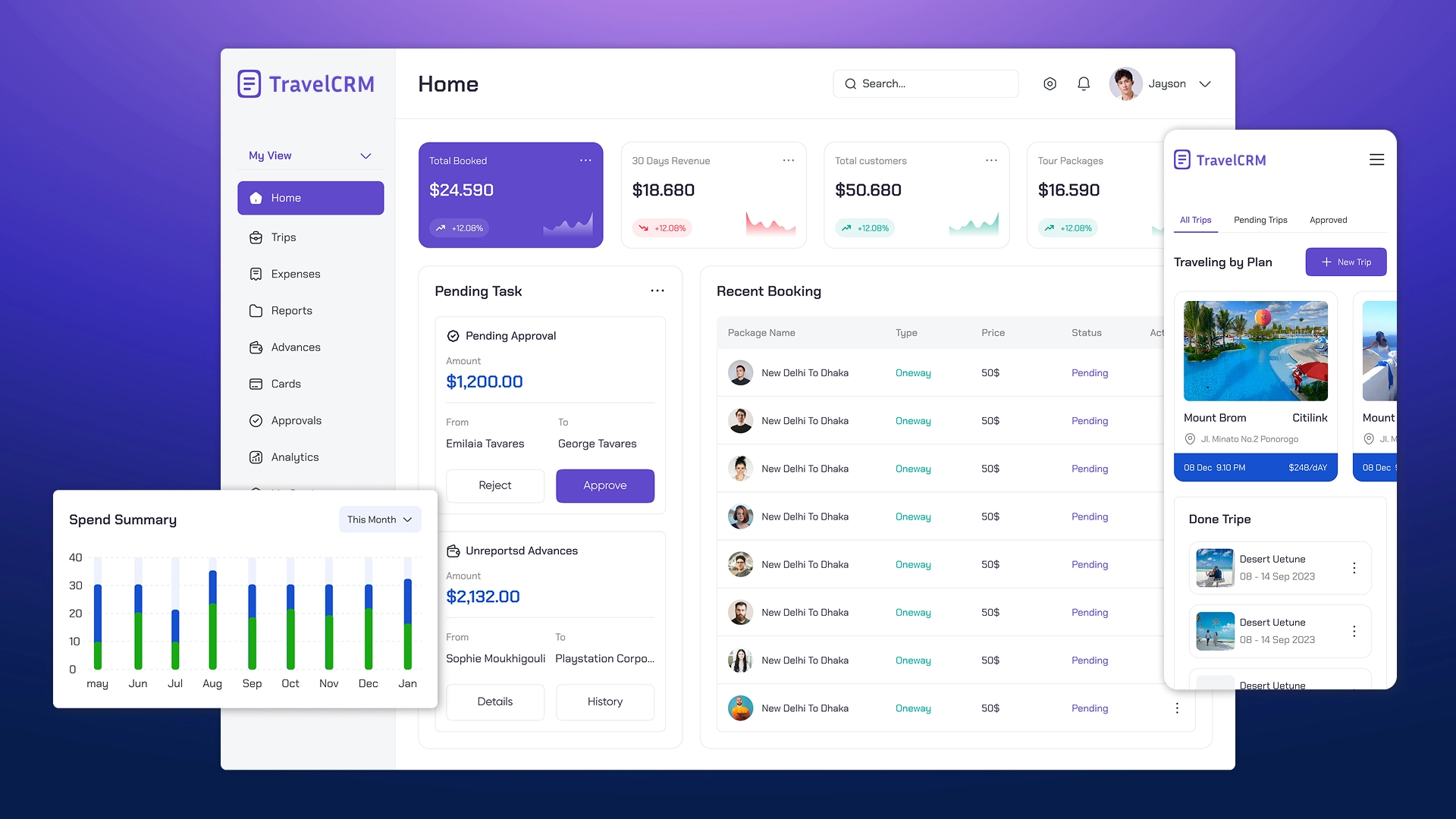
The best travel agency software in 2026 includes all-in-one advisor platforms like TravelBoost, Travefy, and TravelJoy, tour-operator tools like Ezus and Tourwriter, booking systems like Rezdy, FareHarbor, and WeTravel, retail-agency platforms like TravelWorks, and free options like HubSpot. The right platform centralises your clients, bookings, itineraries, and commissions — saving hours and boosting profit.
That's the short answer. Below, we compare all 11 platforms with real 2026 pricing and the best use case for each, plus how to choose the right software for your travel agency. Whether you're a solo advisor drowning in spreadsheets or a growing agency needing to scale, the right travel agency software is the fastest way to work smarter and earn more.
Key Takeaways
11 platforms for every need — all-in-one advisor CRMs, tour-operator tools, booking engines, and free options.
CRM software pays off fast. Agencies using a CRM respond about 33% faster to leads and convert roughly 25% more of them, per industry research.
TravelBoost, Travefy, and TravelJoy lead for independent advisors wanting an all-in-one platform.
Pricing ranges widely — from free (HubSpot) to $129+/month (tour-operator platforms), with most advisor tools around $30–$60/month.
Match software to your model. Solo advisors, tour operators, and activity providers each need different tools.
A quarter of agencies still run on spreadsheets — switching to real travel agency software is a genuine competitive edge.
Why Travel Agency Software Matters
Travel agency software is what separates agencies that scale from those stuck drowning in spreadsheets, sticky notes, and crossed fingers. As an advisor, you juggle leads, client details, itineraries, bookings, payments, and commissions across many suppliers — and doing that manually is slow, error-prone, and caps your growth. The right software centralises everything into one system.
The payoff is measurable: agencies using a CRM respond about 33% faster to leads and convert around 25% more of them, according to industry research, and agencies that follow up consistently see conversion lifts of 28–35%. Yet roughly a quarter of agencies still run on spreadsheets and email in 2026 — meaning good software is a real edge over the competition.
Here's what travel agency software does for you:
Centralises clients and bookings in one source of truth.
Automates follow-up so no lead goes cold.
Tracks commissions so you never lose money you're owed.
Builds itineraries and proposals faster and more professionally.
Saves hours every week on admin.
The opportunity is huge — the World Travel & Tourism Council forecasts Travel & Tourism to contribute $12 trillion globally in 2026, and Phocuswright research shows travel agencies' market share rising. The agencies capturing that growth run on solid systems. Let's find yours.
What Is Travel Agency Software?
Travel agency software is a digital platform that helps travel advisors and agencies manage their business — including client relationships (CRM), bookings, itineraries, proposals, payments, and commission tracking — in one place. Some tools are all-in-one platforms; others specialise in a single function like itinerary building or activity booking.
A few core terms defined up front, since we'll use them throughout:
A CRM (customer relationship management) system stores client data and automates follow-up.
An itinerary builder creates professional, branded trip plans for clients.
A booking engine lets clients book or reserve travel online.
Commission tracking monitors what suppliers owe you per booking.
An all-in-one platform combines CRM, itineraries, bookings, and commissions in one login.
A GDS (global distribution system) like Sabre or Amadeus provides inventory and bookings.
White-label software carries your brand rather than the vendor's.
Travel agency management software is a broad term for platforms that run your whole operation.
An integration connects your software to other tools (accounting, payments, email).
With the vocabulary set, here are the 11 best platforms.
The 11 Best Travel Agency Software Platforms
Here's a quick comparison before the details. Pricing is accurate as of 2026 and changes often — always confirm current rates.
# | Platform | Starting price (2026) | Best for |
|---|---|---|---|
1 | TravelBoost | Free trial | All-in-one for advisors |
2 | Travefy | ~$49/mo | Independent advisors (all-in-one) |
3 | TravelJoy | Freemium | New & solo leisure advisors |
4 | Tern | Subscription | Sales pipeline & automation |
5 | Ezus | ~$129/mo | Tour operators & DMCs |
6 | Tourwriter | ~$59/user/mo | Itineraries for tour operators |
7 | WeTravel | Free + fees | Group travel & payments |
8 | Rezdy | ~$59/mo + ~1% | Tours & activities booking |
9 | FareHarbor | Booking fee | Activity operators |
10 | TravelWorks | ~$100+/user/mo | Retail agencies (high GDS volume) |
11 | HubSpot | Free | Best free CRM starting point |
1. TravelBoost — Best All-in-One for Advisors
TravelBoost is an all-in-one platform built for travel advisors and agencies, combining client management (CRM), bookings, itineraries, and — crucially — commission tracking in one login. Its focus is making sure you capture every commission you're owed while managing the whole client journey from inquiry to repeat booking. We built it to give advisors one affordable source of truth instead of five disconnected tools. You can start with a free trial. It's ideal for solo advisors and small agencies who want simplicity, strong commission tracking, and room to grow.
2. Travefy — Best All-in-One for Independent Advisors
Travefy is a well-established all-in-one platform for independent advisors and small host teams, combining CRM, itinerary building, proposals, commission tracking, and a client-facing mobile app. Its strength is breadth — one login for your whole book. Pricing starts around $49/month. The main trade-off is that its client app is multi-tenant (travellers see the Travefy brand, not yours). A top choice for solo advisors wanting a proven all-in-one.
3. TravelJoy — Best for New and Solo Leisure Advisors
TravelJoy is popular among newer and smaller agencies for its approachable CRM, proposal templates, and online payment collection. It's designed to be easy to learn, making it a great first platform for solo advisors and boutique agencies with straightforward leisure books. A freemium/entry-level model keeps it accessible. If you want simple client management and proposals without complexity, TravelJoy is an excellent starting point.
4. Tern — Best for Sales Pipeline and Automation
Tern is a fast-growing platform focused on CRM, lead management, and workflow automation for travel advisors. Its strength is helping you manage your sales pipeline and automate client communications so no lead slips. It works best as a CRM and automation layer rather than a complete all-in-one (it doesn't offer a white-label app or corporate modules). Ideal for advisors who prioritise sales and automated follow-up.
5. Ezus — Best for Tour Operators and DMCs
Ezus is built for tour operators, DMCs, and agencies creating tailor-made group and custom (FIT) experiences. Its strength is proposal design and pricing — generating visually rich, budgeted proposals fast — plus CRM, trip building, and multi-currency financial management in one modern interface. Pricing starts around $129/month. Best for growing agencies (5–15 people) building complex, multi-supplier itineraries.
6. Tourwriter — Best Itinerary Software for Tour Operators
Tourwriter is a cloud-based CRM and itinerary platform tailored for independent agents and tour operators, especially luxury, safari, and high-touch brands. It excels at building detailed, multi-day itineraries with supplier coordination. Pricing is around $59/user/month. If crafting complex, premium itineraries is your core work, Tourwriter delivers the depth simpler CRMs can't.
7. WeTravel — Best for Group Travel and Payments
WeTravel is a specialised platform for managing group trips, focused on simplifying booking and payment collection. You create a professional trip page with itinerary and pricing, register travellers, and handle all payments and logistics in one place. It's free to use, earning through payment processing. Ideal for advisors and organisers running multi-day group tours and retreats.
8. Rezdy — Best for Tours and Activities Booking
Rezdy is purpose-built for the tours and activities segment, where real-time inventory management and OTA channel distribution are essential. It handles multi-channel booking and syncs availability across resellers like Viator. Pricing starts around $59/month plus a small transaction fee. Best for tour and activity operators who need to distribute inventory widely and manage bookings in real time.
9. FareHarbor — Best for Activity Operators
FareHarbor is a reservation platform for tours and activities with a built-in CRM, payment processing, and GDS/OTA connectivity. It centralises bookings from all sources into one calendar and stores customer history. It typically charges a per-booking fee rather than a monthly subscription. A strong choice for activity and experience providers wanting robust reservations without upfront costs.
10. TravelWorks — Best for Retail Agencies With High GDS Volume
TravelWorks is a comprehensive CRM and ERP platform for the day-to-day operations of retail travel agencies, with deep GDS support (particularly Sabre). It's a trusted choice for agencies processing high booking volumes. Pricing runs roughly $100–$133/user/month or custom. Best for mid-size to large retail agencies with heavy GDS transactions and complex back-office needs.
11. HubSpot — Best Free CRM Starting Point
HubSpot offers a genuinely free CRM covering contact management, deal pipelines, email sequences, and follow-up reminders, with unlimited users and contacts. For a small agency coming off spreadsheets, it's enough to get organised without spending a dollar. The catch: it's not travel-native, so it lacks an itinerary builder and supplier tools — you'll pair it with a travel-specific tool. Best as a free lead-management starting point.
Types of Travel Agency Management Software
Understanding the categories helps you choose. Travel agency management software generally falls into these types:
Type | What it does | Examples |
|---|---|---|
All-in-one advisor platform | CRM + itineraries + bookings + commissions | TravelBoost, Travefy |
CRM / client management | Leads, follow-up, client data | TravelJoy, Tern, HubSpot |
Itinerary & proposal builder | Branded trip plans and quotes | Tourwriter, Ezus |
Booking / reservation engine | Online booking & inventory | Rezdy, FareHarbor, WeTravel |
Retail agency ERP | Full operations + GDS + back office | TravelWorks |
Most solo advisors are best served by an all-in-one advisor platform or a CRM, while tour operators need itinerary and booking tools, and large retail agencies need ERP-grade systems. Many agencies combine two or three tools — for example, a CRM plus a booking engine plus accounting software. The goal is a connected stack that acts as a single source of truth, not five disconnected apps.
How to Choose Software for Your Travel Agency
With 11 strong options, here's how we recommend choosing the right software for your travel agency:
Match your model. Solo advisor? TravelBoost, Travefy, or TravelJoy. Tour operator? Ezus or Tourwriter. Activities? Rezdy or FareHarbor.
Prioritise commission tracking. For advisors, capturing every commission is pure profit — don't overlook it.
Check integrations. Ensure it connects to your accounting software, payment processor, and email.
Consider ease of use. The best software is the one you'll actually use daily.
Think about growth. Choose a platform that scales with you.
Use free trials. Test two or three before committing.
Run a real inquiry through each finalist — from lead to itinerary to booking to invoice — and see which feels smoothest. For the financial side, pair your platform with dedicated accounting software for travel agencies, and make sure it tracks the travel agency commission you're owed.
What Is the Best Travel Agency Software?
The best travel agency software depends on your business model. For independent advisors, all-in-one platforms like TravelBoost, Travefy, and TravelJoy are best. For tour operators and DMCs, Ezus and Tourwriter lead. For tours and activities, Rezdy and FareHarbor are best. For a free start, HubSpot is the top pick. And for large retail agencies, TravelWorks offers ERP-grade depth.
There's no single "best" for everyone — the right choice matches your size, niche, and workflow. For most solo and small home-based advisors, we recommend an all-in-one advisor platform with strong commission tracking, since capturing every commission and automating follow-up is where the fastest profit gains come from. Test a couple with free trials before deciding.
How Much Does Travel Agency Software Cost?
Travel agency software ranges from free (HubSpot's CRM) to $129+/month for tour-operator platforms, with most advisor tools costing $30–$60/month. Booking platforms like Rezdy and FareHarbor often charge transaction or booking fees instead of (or alongside) a subscription, while retail-agency ERPs like TravelWorks run $100+/user/month.
Budget for the total cost, not just the sticker price: add any per-user fees, transaction fees, and integrations. That said, good software pays for itself quickly — capturing a single missed commission or converting a few more leads typically covers the monthly cost many times over. For a solo advisor, a free or ~$30–$50/month tool is plenty to start; you can upgrade as you scale.
Do I Need Travel Agency Management Software?
Yes — if you're serious about growing, you need travel agency management software (or at least a CRM). While you can start with spreadsheets, the volume of leads, clients, bookings, and commissions quickly makes manual tracking slow and error-prone, capping your growth and costing you missed commissions. Around a quarter of agencies still run on spreadsheets — and they're the ones losing leads and money.
Even a free tool like HubSpot beats spreadsheets for lead management, and a travel-specific all-in-one platform adds itineraries, bookings, and commission tracking. The hours saved and the leads and commissions captured far outweigh the cost. As your booking volume grows, travel agency management software shifts from "nice to have" to essential.
What Software Do Travel Agents Use?
Travel agents use a mix of tools depending on their size and model: all-in-one advisor platforms (TravelBoost, Travefy), CRMs (TravelJoy, Tern, HubSpot), itinerary builders (Tourwriter, Ezus), booking engines (Rezdy, FareHarbor, WeTravel), GDS systems (Sabre, Amadeus) for inventory, and accounting software (QuickBooks, Xero) for their books. Many combine a travel-specific platform with a GDS and accounting tool.
The trend in 2026 is toward consolidation — agencies increasingly want a single source of truth rather than juggling disconnected tools. Solo advisors favour lightweight all-in-one platforms for ease of use, while larger agencies and tour operators use more comprehensive systems. The best setup is the simplest one that covers your whole workflow from lead to repeat booking.
What to Look For in Software for Travel Agency Success
When comparing software for travel agency owners, certain features matter far more than others. Here's what we tell agencies to prioritise:
Feature | Why it matters |
|---|---|
CRM / client management | A central record of every client and lead |
Itinerary & proposal builder | Professional, branded trip plans that win bookings |
Commission tracking | Capture every dollar you're owed |
Booking management | All reservations organised in one place |
Automation | Follow-ups that run themselves |
Integrations | Connect accounting, payments, and email |
Reporting | See which niches and suppliers are profitable |
Mobile access | Manage your agency on the go |
The single most important feature for advisors is commission tracking, since uncaptured commission is pure lost profit. Beyond that, prioritise ease of use and integrations — the best software for travel agency businesses is the one that connects your whole workflow and that you'll actually use every day. Don't be dazzled by long feature lists; focus on the handful of capabilities that match how you truly work. In our experience, a focused tool with well-executed essentials beats a bloated platform you abandon after a month. Choose software for travel agency growth that covers your core workflow from lead to repeat booking, with room to add features as you scale.
The Rise of All-in-One Travel Agency Software
The travel agency software landscape is consolidating fast. In 2026, roughly 30% of agencies use a travel-specific platform, about 25% use a customised generic CRM, another 25% still rely on spreadsheets and email, and around 20% run older legacy systems, according to industry surveys. The clear direction — confirmed by Skift research and software-review data from Capterra and G2 — is toward all-in-one platforms that act as a single source of truth.
Why the shift? Because juggling five disconnected tools causes errors, double data entry, and lost leads. Statista data shows small businesses increasingly favour integrated cloud tools, and Think with Google research confirms that fast, consistent follow-up — exactly what automation enables — is decisive in converting today's travellers. In our experience, agencies that consolidate onto one connected platform respond faster, capture more commissions, and scale more smoothly than those stitching separate tools together. The future of travel agency software is integrated, automated, and mobile — and the agencies adopting it now are pulling ahead of those still buried in spreadsheets.
Common Mistakes When Choosing Travel Agency Software
Avoid these errors when selecting your platform:
Choosing on price alone. The cheapest tool is costly if you won't use it or it lacks key features.
Ignoring commission tracking. For advisors, uncaptured commission is lost profit.
Over-buying. A solo advisor rarely needs enterprise ERP software.
Skipping integrations. Software that won't connect to your other tools creates double entry.
Not testing first. Always use free trials before committing.
Juggling too many tools. Five disconnected apps cause errors; aim for a connected stack.
Forgetting scalability. Pick software that grows with your agency.
Avoid these, and your software becomes a profit engine rather than an expensive frustration.
Frequently Asked Questions
What is the best travel agency software? The best travel agency software depends on your model: all-in-one platforms like TravelBoost, Travefy, and TravelJoy for independent advisors; Ezus and Tourwriter for tour operators; Rezdy and FareHarbor for tours and activities; TravelWorks for large retail agencies; and HubSpot for a free start. Match the tool to your size, niche, and workflow.
How much does travel agency software cost? It ranges from free (HubSpot) to $129+/month for tour-operator platforms, with most advisor tools costing $30–$60/month. Booking platforms often charge transaction fees instead of subscriptions, and retail ERPs run $100+/user/month. Good software typically pays for itself by capturing missed commissions and converting more leads.
Do travel agents need software? Yes, if they're serious about growing. Travel agency software centralises leads, clients, bookings, and commissions, saving hours and preventing lost leads and missed commissions. Even a free CRM beats spreadsheets, and a travel-specific all-in-one platform adds itineraries and commission tracking. Around a quarter of agencies still use spreadsheets — and lose out because of it.
What is travel agency management software? Travel agency management software is a broad term for platforms that run your whole operation — CRM, bookings, itineraries, payments, commissions, and reporting — in one system. It ranges from all-in-one advisor platforms to comprehensive retail-agency ERPs, helping agencies centralise operations and scale efficiently.
What software do travel agents use? Travel agents use all-in-one platforms (TravelBoost, Travefy), CRMs (TravelJoy, HubSpot), itinerary builders (Tourwriter, Ezus), booking engines (Rezdy, FareHarbor), GDS systems (Sabre, Amadeus), and accounting tools (QuickBooks, Xero). Many combine a travel-specific platform with a GDS and accounting software, though the trend is toward all-in-one consolidation.
Is there free travel agency software? Yes. HubSpot offers a genuinely free CRM for lead and client management, and WeTravel is free to use (earning through payment fees). These are great starting points, though free tools often lack travel-specific features like itinerary building and commission tracking, which travel-specific platforms provide. Many advisors start free and upgrade as they grow.
Can I run a travel agency without software? Technically yes, using spreadsheets and email — and around a quarter of agencies still do. But it's inefficient and caps your growth: leads slip through the cracks, follow-ups get forgotten, and commissions go unclaimed. Even a free CRM dramatically improves your organisation and conversion. As your booking volume grows, running without proper travel agency software costs you far more in lost time and revenue than any subscription would.
What's the difference between a CRM and travel agency software? A CRM (customer relationship management) tool focuses on managing leads, clients, and follow-ups. Travel agency software is broader — an all-in-one platform typically includes CRM features plus travel-specific tools like itinerary building, booking management, and commission tracking. A generic CRM like HubSpot handles the client side well but lacks travel-native features, which is why many advisors choose a dedicated travel platform or pair a CRM with travel-specific tools.
Final Thoughts and Your Software Checklist
The right travel agency software centralises your clients, bookings, and commissions — saving hours and boosting profit. You don't need the most expensive platform; you need the one that fits your model and that you'll actually use. Here's your quick checklist:
✅ Identify your model (advisor, tour operator, activities)
✅ Prioritise commission tracking and ease of use
✅ Shortlist 2–3 platforms that fit
✅ Check integrations with your other tools
✅ Test with free trials
✅ Choose one and commit
✅ Pair it with accounting software for a complete stack
The agencies that win in 2026 run on solid systems, not spreadsheets and sticky notes. Pick a platform, get organised, and watch how much time — and profit — you reclaim. If you're just starting out, our guide on how to start a travel agency shows where software fits in your launch.
Ready to centralise your clients, bookings, and commissions in one place? Start your free TravelBoost trial to manage your whole agency and capture every commission you're owed — and download our free software comparison checklist to find your perfect fit.
Want a CRM that's actually built for travel?
Leads, bookings, suppliers, Hajj operations, tours, car rental, finance — all in one platform. Set up in 10 minutes.
Start free 14-day trialWeekly playbook for travel-agency operators
One email a week — product updates, benchmarks, and behind-the-scenes changelog. No spam.