
- 1Key Takeaways
- 2Why Your Travel Agency Needs a CRM
- 3What Is a Travel Agency CRM?
- 4The 9 Best Travel Agency CRM Systems
- 1. TravelBoost — Best All-in-One CRM for Advisors
- 2. Travefy — Best All-in-One for Independent Advisors
- 3. TravelJoy — Best for New and Solo Advisors
- 4. Tern — Best for Sales Pipeline and Automation
- 5. HubSpot — Best Free CRM
- 6. Zoho CRM — Best Budget and Customisable Option
- 7. Salesforce — Best for Large Agencies
- 8. Ezus — Best CRM for Tour Operators and DMCs
- 9. monday CRM — Best for Flexible Pipelines and Groups
- 5What to Look for in Travel Agency CRM Software
- 6How to Choose a CRM System for Your Travel Agency
- 7What Is the Best CRM for a Travel Agency?
- 8How Much Does a Travel Agency CRM Cost?
- 9Do Travel Agents Need a CRM?
- 10What Is a CRM System for a Travel Agency?
- 11The Travel Agency CRM Landscape in 2026
- 12Travel-Specific CRM vs. General CRM: Which Is Right?
- 13How a Travel Agency CRM Wins You More Bookings
- 14Common Travel Agency CRM Mistakes to Avoid
- 15Frequently Asked Questions
- 16Final Thoughts and Your CRM Checklist
Travel Agency CRM: 9 Best Systems to Win More Bookings in 2026
Travel agency CRM compared: the 9 best systems to manage clients, automate follow-up, and win more bookings — from all-in-one platforms to free tools — in 2026.

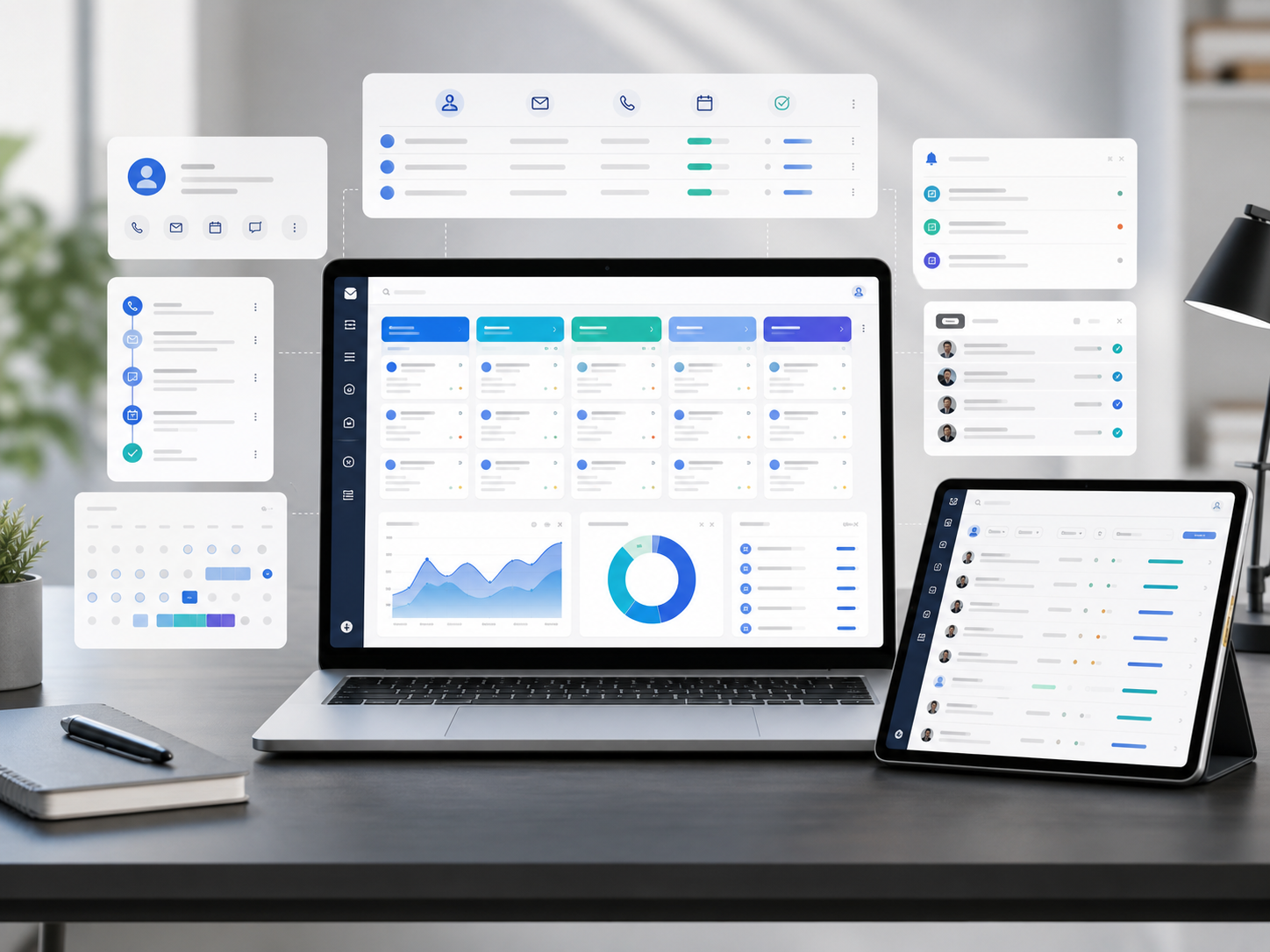
The best travel agency CRM in 2026 helps you capture leads, automate follow-up, and manage every client relationship in one place — and the top 9 systems are TravelBoost, Travefy, TravelJoy, Tern, HubSpot, Zoho CRM, Salesforce, Ezus, and monday CRM. The right CRM directly wins you more bookings, because agencies using one respond about 33% faster to leads and convert roughly 25% more of them.
That's the short answer. Below, we compare all 9 systems with real 2026 pricing and the best use case for each, plus what to look for and how to choose. Whether you're a solo advisor losing leads in your inbox or a growing agency ready to scale, the right travel agency CRM is the single fastest way to convert more inquiries into booked, repeat clients.
Key Takeaways
A CRM wins you more bookings. Agencies using a CRM respond about 33% faster to leads and convert roughly 25% more of them, per industry research.
Speed is decisive. Responding within 5 minutes makes you up to 9× more likely to convert a lead — a CRM automates that speed.
9 systems for every need — all-in-one advisor platforms, general CRMs, and tour-operator tools.
Pricing ranges widely — from free (HubSpot) to $129+/month (tour-operator platforms), with most around $12–$60/month.
A quarter of agencies still use spreadsheets — adopting a travel agency CRM is a real competitive edge.
Follow-up is where money is made. About 80% of leads never convert without consistent follow-up, which a CRM handles automatically.
Why Your Travel Agency Needs a CRM
A travel agency CRM (customer relationship management system) is what turns scattered leads and forgotten follow-ups into booked, repeat clients. As an advisor, you capture inquiries from social media, email, referrals, and your website — and without a system, those leads slip through the cracks. A CRM centralises every client and automates the follow-up that actually closes bookings.
The impact is measurable. Agencies using a CRM respond about 33% faster to leads and convert around 25% more of them, according to industry research, and agencies that follow up consistently see conversion lifts of 28–35%. Speed matters enormously: responding to a lead within five minutes makes you up to 9× more likely to convert. Yet about 80% of leads never convert without follow-up, and roughly a quarter of agencies still run on spreadsheets — so a CRM is a genuine edge.
Here's what a travel agency CRM does for you:
Captures every lead from all your channels in one place.
Automates follow-up so no inquiry goes cold.
Tracks the sales pipeline so you always know your next step.
Stores client preferences and history for personal service at scale.
Boosts repeat business through organised, timely communication.
The opportunity is huge — the World Travel & Tourism Council forecasts Travel & Tourism to contribute $12 trillion globally in 2026, and Phocuswright research shows travel agencies' market share rising. The agencies capturing that growth convert leads systematically. Let's find your CRM.
What Is a Travel Agency CRM?
A travel agency CRM is software that helps you manage client relationships — capturing leads, tracking inquiries, automating follow-up, storing client data, and managing your sales pipeline — so you convert more prospects into booked clients. Some are travel-specific (with itineraries and commission tracking built in); others are general CRMs adapted for travel.
A few core terms defined up front, since we'll use them throughout:
A CRM (customer relationship management) system stores client data and manages interactions.
A lead is a potential client who has shown interest.
A sales pipeline tracks each lead's stage from inquiry to booking.
Lead management is capturing, organising, and following up on leads.
Automation uses software to send follow-ups and reminders without manual work.
A conversion rate is the percentage of leads who become clients.
An all-in-one platform combines CRM with itineraries, bookings, and commissions.
Commission tracking monitors what suppliers owe you per booking.
Travel agency CRM software is any CRM tailored to or used by travel businesses.
An integration connects your CRM to email, payments, and other tools.
With the vocabulary set, here are the 9 best systems.
The 9 Best Travel Agency CRM Systems
Here's a quick comparison before the details. Pricing is accurate as of 2026 and changes often — always confirm current rates.
# | CRM system | Starting price (2026) | Best for |
|---|---|---|---|
1 | TravelBoost | Free trial | All-in-one for advisors |
2 | Travefy | ~$49/mo | Independent advisors (all-in-one) |
3 | TravelJoy | Freemium | New & solo leisure advisors |
4 | Tern | Subscription | Sales pipeline & automation |
5 | HubSpot | Free | Best free CRM starting point |
6 | Zoho CRM | ~$14/user/mo | Budget-conscious & customisable |
7 | Salesforce | Higher / custom | Large agencies (15+ agents) |
8 | Ezus | ~$129/mo | Tour operators & DMCs |
9 | monday CRM | ~$12/user/mo | Flexible pipelines & group bookings |
1. TravelBoost — Best All-in-One CRM for Advisors
TravelBoost is an all-in-one travel agency CRM built for advisors, combining client management, bookings, itineraries, and commission tracking in one login. Its focus is helping you capture every lead, automate follow-up, and never miss a commission — the three things that win and retain bookings. We built it to give advisors one affordable source of truth instead of juggling disconnected tools. You can start with a free trial. It's ideal for solo advisors and small agencies who want simplicity, strong commission tracking, and room to grow.
2. Travefy — Best All-in-One for Independent Advisors
Travefy is a well-established all-in-one platform for independent advisors, combining CRM, itinerary building, proposals, commission tracking, and a client-facing mobile app. Its CRM lets you capture leads, track inquiries and bookings, automate workflows, and never miss a follow-up. Pricing starts around $49/month. The main trade-off is a multi-tenant client app (travellers see the Travefy brand). A top choice for advisors wanting a proven all-in-one travel agency CRM.
3. TravelJoy — Best for New and Solo Advisors
TravelJoy is popular among newer and smaller agencies for its approachable CRM, proposal templates, and online payment collection. It's designed to be easy to learn, making it a great first CRM for solo advisors and boutique agencies with straightforward leisure books. A freemium model keeps it accessible. If you want simple, travel-native client management without complexity, TravelJoy is an excellent starting point.
4. Tern — Best for Sales Pipeline and Automation
Tern is a fast-growing CRM focused on lead management, sales pipeline, and workflow automation for travel advisors. Its strength is helping you manage your pipeline and automate client communications so no lead slips away. It works best as a dedicated CRM and automation layer. Ideal for advisors who prioritise sales pipeline management and automated, timely follow-up to win more bookings.
5. HubSpot — Best Free CRM
HubSpot offers a genuinely free CRM covering contact management, deal pipelines, email sequences, and follow-up reminders, with unlimited users and contacts. For a small agency coming off spreadsheets, it's enough to get organised without spending a dollar. The catch: it's not travel-native, so it lacks an itinerary builder and supplier tools — you'll pair it with a travel-specific tool. Best as a free lead-management starting point for a crm for travel agency owners on a budget.
6. Zoho CRM — Best Budget and Customisable Option
Zoho CRM is an affordable, highly customisable CRM starting around $14/user/month, with a free tier for very small teams. It offers powerful automation and integrates with the wider Zoho suite. Travel-specific configurations (like ZoFlowX) build travel workflows on top of Zoho. Best for budget-conscious agencies that want robust features and are willing to customise it for travel.
7. Salesforce — Best for Large Agencies
Salesforce is the largest, most powerful CRM platform, offering nearly unlimited customisation. Its Starter tier makes it accessible to growing agencies, but the honest truth is most small agencies don't need it — the setup is involved and every travel workflow must be built from scratch. Best for large agencies (15+ agents), corporate travel portfolios, or those with serious compliance needs who won't outgrow it.
8. Ezus — Best CRM for Tour Operators and DMCs
Ezus is a travel agency CRM built for tour operators, DMCs, and agencies creating tailor-made group and custom trips. It combines CRM, AI-powered proposal design, trip building, and multi-currency financial management in one modern interface. Pricing starts around $129/month. Best for growing agencies (5–15 people) building complex, multi-supplier itineraries who need CRM connected to production.
9. monday CRM — Best for Flexible Pipelines and Groups
monday CRM is a flexible, visual CRM that lets you build precisely the pipeline you need — including for complex group bookings like corporate retreats, destination weddings, or school trips. It consolidates deals, contacts, and communication history with strong automation. Pricing starts around $12/user/month. Best for agencies wanting a customisable, visual pipeline rather than a rigid travel-specific workflow.
What to Look for in Travel Agency CRM Software
When comparing travel agency CRM software, certain features matter far more than others. Here's what we tell agencies to prioritise:
Feature | Why it matters |
|---|---|
Lead capture | Get every inquiry into one place |
Automated follow-up | Convert leads without manual effort |
Sales pipeline | Always know your next action |
Client profiles & history | Personal service at scale |
Commission tracking | Capture every dollar owed (advisor tools) |
Itinerary/proposal tools | Win bookings faster (travel-specific) |
Integrations | Connect email, payments, accounting |
Mobile access | Manage clients on the go |
The most important capability for winning bookings is automated, fast follow-up, since speed and consistency are what convert leads. For advisors, commission tracking is a close second — it protects your profit. Beyond that, prioritise ease of use: the best travel agency CRM software is the one you'll actually use every day. Don't be dazzled by long feature lists; focus on the handful that match your workflow. A simple CRM you use beats a powerful one you abandon.
How to Choose a CRM System for Your Travel Agency
With 9 strong options, here's how we recommend choosing a CRM system for your travel agency:
Match your model. Solo advisor? TravelBoost, Travefy, or TravelJoy. Tour operator? Ezus. Large agency? Salesforce. Budget start? HubSpot or Zoho.
Prioritise follow-up automation. This is what converts leads into bookings.
Value commission tracking. For advisors, it's pure protected profit.
Check integrations. Ensure it connects to your email, payments, and accounting.
Prioritise ease of use. The best CRM system for a travel agency is the one you'll use daily.
Use free trials. Test two or three before committing.
Run a real inquiry through each finalist — from lead capture to follow-up to booking — and see which feels smoothest. The right CRM system for your travel agency captures leads the moment they arrive and follows up automatically, so you win bookings you'd otherwise lose. Pair it with strong travel agency lead generation to fill the pipeline, and email marketing for travel agencies to nurture it.
What Is the Best CRM for a Travel Agency?
The best CRM for a travel agency depends on your model. For independent advisors, all-in-one platforms like TravelBoost, Travefy, and TravelJoy are best. For a free start, HubSpot leads. For budget and customisation, Zoho CRM wins. For tour operators, Ezus is ideal. And for large agencies, Salesforce offers enterprise depth.
There's no single best CRM for a travel agency — the right choice matches your size, niche, and workflow. For most solo and small home-based advisors, we recommend an all-in-one travel-specific platform with strong lead capture, follow-up automation, and commission tracking, since that's where the fastest booking gains come from. Test a couple with free trials before deciding.
How Much Does a Travel Agency CRM Cost?
A travel agency CRM ranges from free (HubSpot) to $129+/month for tour-operator platforms, with most costing $12–$60/month. General CRMs like Zoho and monday start around $12–$14/user/month, travel-specific advisor tools like Travefy run about $49/month, and enterprise platforms like Salesforce cost more. Many offer free trials or freemium tiers.
Budget for the total cost, including per-user fees and integrations. That said, a CRM pays for itself fast: converting even a few more leads a month — which automated follow-up reliably does — typically covers the subscription many times over. For a solo advisor, a free or ~$12–$50/month tool is plenty to start. The return comes from the bookings you'd otherwise lose to slow or forgotten follow-up.
Do Travel Agents Need a CRM?
Yes — travel agents genuinely need a CRM (or at minimum an organised system) to capture leads, automate follow-up, and convert more inquiries into bookings. While you can start with spreadsheets, the volume of leads and the importance of fast, consistent follow-up quickly make manual tracking a liability — around 80% of leads never convert without follow-up, and slow responses lose bookings to faster competitors.
Even a free CRM like HubSpot dramatically improves your organisation and conversion versus spreadsheets. As your inquiry volume grows, a travel agency CRM shifts from "nice to have" to essential — it's the difference between chasing your inbox and running a real, scalable business. The bookings and time it wins back far outweigh the cost.
What Is a CRM System for a Travel Agency?
A CRM system for a travel agency is software that centralises client relationships — capturing leads, tracking the sales pipeline, automating follow-up, storing client history, and (in travel-specific tools) managing itineraries and commissions. It replaces spreadsheets, sticky notes, and scattered inboxes with one organised source of truth for your entire client base.
The purpose of a CRM system for a travel agency is simple: help you convert more leads and retain more clients with less manual effort. Travel-specific systems add itinerary building and commission tracking, while general CRMs offer flexible pipelines you adapt for travel. Either way, the goal is the same — never lose a lead, always follow up, and turn one-time travellers into loyal, repeat clients.
The Travel Agency CRM Landscape in 2026
The travel agency CRM landscape is shifting fast. In 2026, roughly 30% of agencies use a travel-specific CRM, about 25% use a customised generic CRM, another 25% still rely on spreadsheets and email, and around 20% run older legacy systems, according to industry surveys. The direction — confirmed by Skift research and software-review data from Capterra and G2 — is toward integrated systems that serve as a single source of truth.
Why the shift? Because a disconnected crm system for travel agency use causes lost leads and double data entry. Statista data shows small businesses increasingly favour integrated cloud tools, and sales research from HubSpot confirms that fast, automated follow-up is decisive in converting leads. In our experience, agencies that adopt a proper crm system for travel agency operations respond faster, capture more commissions, and scale more smoothly. The future of the travel agency CRM is integrated, automated, and mobile — and agencies adopting it now are pulling ahead of those still buried in spreadsheets.
Travel-Specific CRM vs. General CRM: Which Is Right?
A key decision is whether you need a travel-specific CRM or a general one adapted for travel. Both work — here's how to choose the right crm for travel agency needs:
Travel-specific CRM | General CRM |
|---|---|
Travefy, TravelJoy, Ezus, TravelBoost | HubSpot, Zoho, Salesforce, monday |
Built-in itineraries & commissions | Flexible but no travel features |
Ready to use for travel out of the box | Requires customisation for travel |
Best for pure travel workflows | Best for budget & flexibility |
A travel-specific crm for travel agency work comes with itinerary building, commission tracking, and supplier tools ready out of the box — ideal if travel is your whole business. A general CRM offers more flexibility and often a lower entry price, but you'll adapt it to travel yourself and add separate itinerary tools. Our recommendation: most advisors are best served by a travel-specific crm system for travel agency management, while budget-conscious or highly custom operations may prefer a general CRM they configure. Match the choice to whether you value travel-native features or flexibility more.
How a Travel Agency CRM Wins You More Bookings
The whole point of a travel agency CRM is winning more bookings, so it's worth understanding exactly how it does that:
Speed. It captures leads instantly and can auto-respond — and responding within five minutes makes you up to 9× more likely to convert.
Consistency. Automated sequences follow up repeatedly, since most bookings happen after multiple touches, not the first message.
Personalisation. Stored client history lets you tailor every message to their trip and preferences.
Nothing slips. The visual pipeline shows exactly who needs attention next.
In our experience, the single biggest booking gain agencies get from a travel agency CRM isn't a fancy feature — it's simply never letting a lead go cold. Around 80% of leads never convert without follow-up, and a CRM fixes precisely that. Add commission tracking, and you also protect the profit on every booking you win. A good CRM quietly turns your scattered inbox into a systematic, booking-winning machine — which is exactly why it's the highest-ROI tool most advisors can adopt.
Common Travel Agency CRM Mistakes to Avoid
Avoid these errors when choosing and using your CRM:
Not using one at all. Spreadsheets cap your growth and lose leads.
Choosing on price alone. The cheapest CRM is costly if you won't use it.
Ignoring automation. The whole point is automated follow-up — use it.
Over-buying. A solo advisor rarely needs enterprise Salesforce.
Skipping data entry. A CRM only works if you actually log leads and updates.
Not integrating. A disconnected CRM creates double work.
Forgetting mobile. You need access on the go to respond fast.
Avoid these, and your travel agency CRM becomes a booking-winning engine rather than an unused subscription.
Frequently Asked Questions
What is the best CRM for a travel agency? The best CRM for a travel agency depends on your model: all-in-one platforms like TravelBoost, Travefy, and TravelJoy for independent advisors; HubSpot for a free start; Zoho for budget and customisation; Ezus for tour operators; and Salesforce for large agencies. Match the tool to your size, niche, and workflow.
How much does a travel agency CRM cost? It ranges from free (HubSpot) to $129+/month for tour-operator platforms, with most costing $12–$60/month. General CRMs like Zoho and monday start around $12–$14/user/month, travel-specific tools like Travefy run about $49/month, and enterprise platforms cost more. Many offer free trials.
Do travel agents need a CRM? Yes. A CRM helps travel agents capture leads, automate follow-up, and convert more inquiries into bookings. Around 80% of leads never convert without follow-up, and slow responses lose bookings. Even a free CRM beats spreadsheets, and a travel-specific one adds itineraries and commission tracking. It becomes essential as inquiry volume grows.
What is a CRM system for a travel agency? A CRM system for a travel agency is software that centralises client relationships — capturing leads, tracking the sales pipeline, automating follow-up, and storing client history, plus (in travel-specific tools) itineraries and commissions. It replaces spreadsheets with one organised source of truth to convert more leads and retain more clients.
What is the best free travel agency CRM? HubSpot offers the best free CRM for travel agencies, covering contact management, deal pipelines, email sequences, and follow-up reminders with unlimited users. It's not travel-native (no itinerary builder), so many advisors pair it with a travel-specific tool or upgrade as they grow. WeTravel and some freemium travel tools are also worth exploring.
How does a CRM help travel agents win more bookings? A CRM wins bookings by ensuring fast, consistent follow-up — the biggest driver of conversion. It captures every lead, automates timely responses (responding within 5 minutes makes you 9× more likely to convert), tracks the pipeline so nothing slips, and stores client history for personal service. Agencies using a CRM convert roughly 25% more leads.
Is a travel-specific CRM better than a general one? It depends on your priorities. A travel-specific CRM (like Travefy or TravelJoy) comes with itineraries, commission tracking, and supplier tools built in, making it ideal if travel is your whole business. A general CRM (like HubSpot or Zoho) is more flexible and often cheaper, but you'll customise it for travel and add separate itinerary tools. Most dedicated advisors prefer travel-specific software, while budget-conscious or highly custom operations may favour a general CRM.
Final Thoughts and Your CRM Checklist
The right travel agency CRM captures every lead, automates the follow-up that wins bookings, and turns one-time travellers into loyal clients. You don't need the most expensive system — you need the one that fits your model and that you'll actually use. Here's your quick checklist:
✅ Identify your model (advisor, tour operator, large agency)
✅ Prioritise lead capture and automated follow-up
✅ Value commission tracking (for advisors)
✅ Shortlist 2–3 systems that fit
✅ Check integrations with your other tools
✅ Test with free trials
✅ Choose one, commit, and log every lead
The agencies that win in 2026 convert leads systematically — they don't rely on memory and their inbox. Pick a CRM, capture every inquiry, and follow up fast, and you'll win bookings you'd otherwise lose. To fill your new CRM with leads, see our guides to travel agency lead generation and travel agency marketing.
Ready to capture every lead and win more bookings? Start your free TravelBoost trial to manage clients, automate follow-up, and track every commission in one place — and download our free CRM comparison checklist to find your perfect fit.
Want a CRM that's actually built for travel?
Leads, bookings, suppliers, Hajj operations, tours, car rental, finance — all in one platform. Set up in 10 minutes.
Start free 14-day trialWeekly playbook for travel-agency operators
One email a week — product updates, benchmarks, and behind-the-scenes changelog. No spam.