
- 1Key Takeaways
- 2What Is a Travel Agency Invoice Template?
- 3What Should a Travel Agency Invoice Include?
- 4Invoice vs. Receipt: What's the Difference?
- 5The 5 Free Travel Agency Invoice & Form Templates
- 1. Standard Client Invoice
- 2. Deposit / Estimate Invoice
- 3. Final Balance Invoice
- 4. Group / Corporate Invoice
- 5. Payment Receipt Template
- Quick Reference: Which Form to Use When
- 6How to Fill Out a Travel Agency Invoice Template Step by Step
- 7Common Travel Agency Invoicing Mistakes to Avoid
- 8Do Travel Agency Invoices Need to Meet Any Legal Requirements?
- 9How Do You Follow Up on an Unpaid Travel Agency Invoice?
- 10DIY Template vs. Invoicing Software: Which Should You Use?
- 11Should You Customize Your Travel Agency Invoice Template's Branding?
- 12Travel Agency Invoicing & Forms Glossary
- 13How This Fits Into Your Bigger Plan
- 14Key Takeaways Recap
- 15Frequently Asked Questions
- What should a travel agency invoice include?
- What's the difference between a travel agency invoice and a receipt?
- Can I use a free travel agency invoice template, or do I need software?
- How do I invoice for a deposit versus a final balance?
- Do I need to charge tax on my travel agency invoices?
- How long should I keep copies of travel agency invoices and receipts?
- Can I send an invoice for a group or corporate booking on one document?
Travel Agency Invoice Template: 5 Free Forms to Get Paid Faster
Five free travel agency invoice template layouts — deposit, balance due, group, and receipt versions — plus what every invoice legally needs.

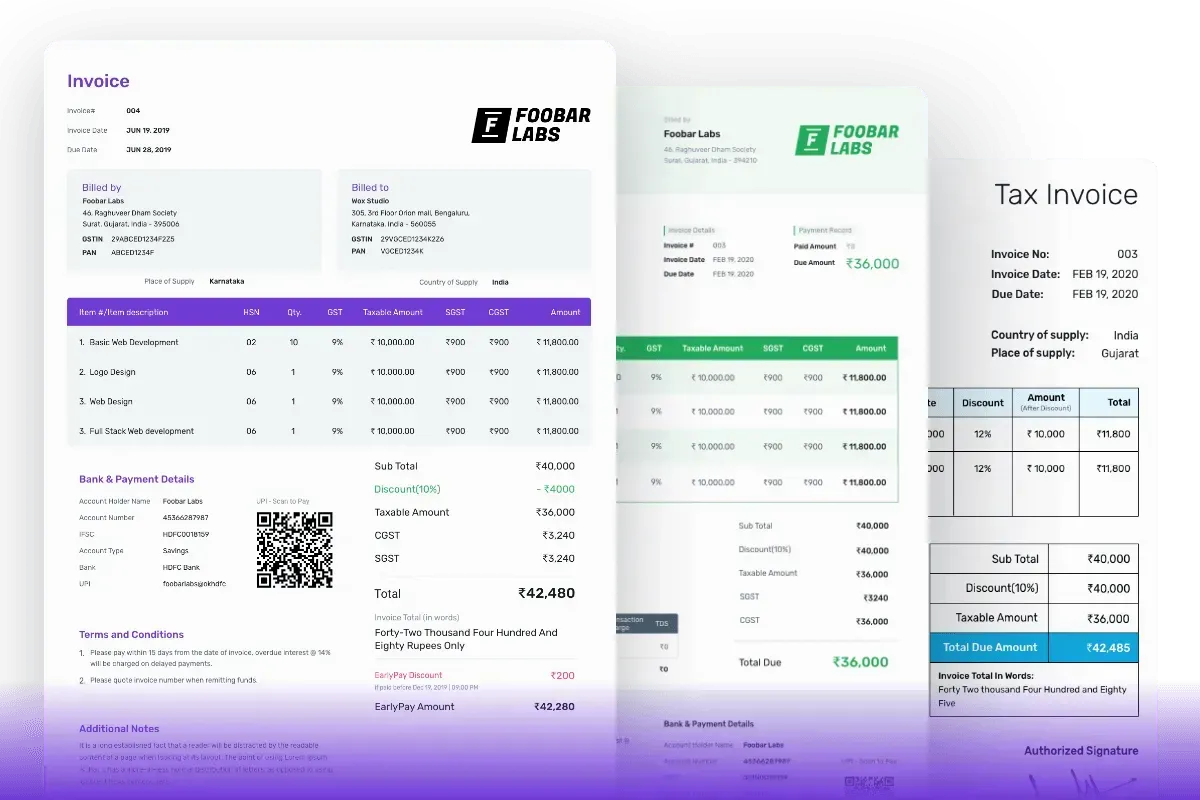
A clean travel agency invoice template does more than look professional — it's the difference between getting paid on time and chasing a client for money three weeks after their trip. Below are five free, ready-to-use templates covering the invoice types every agency actually needs: a standard client invoice, a deposit invoice, a final balance invoice, a group/corporate invoice, and a payment receipt — plus exactly what to put in every field so nothing gets lost in translation between you and your client's bank account.
Key Takeaways
A solid travel agency invoice template separates your service fee from supplier costs on separate lines — mixing them together is the single most common invoicing mistake we see.
We've included 5 free forms: a standard invoice, a deposit invoice, a final balance invoice, a group/corporate invoice, and a receipt template, since most agencies actually need more than one.
Every travel agency invoice should include a unique invoice number, itemized services with dates, taxes and fees shown separately, payment terms, and cancellation/refund policy language.
A travel agency receipt template is different from an invoice — an invoice requests payment, a receipt confirms it was received — and agencies that only use one document type often confuse clients or complicate their own bookkeeping.
Manual templates work fine at low volume, but once you're issuing more than a handful of invoices a month, dedicated travel agency software with built-in invoicing saves real time and cuts errors.
Keep copies of every invoice and receipt for at least three years — most tax authorities, and many Seller of Travel regulations, expect it.
What Is a Travel Agency Invoice Template?
A travel agency invoice template is a pre-formatted billing document that a travel advisor fills in with a client's trip details, service fees, and supplier costs to request payment — built once and reused for every booking instead of formatted from scratch each time. Whether you're brand new and issuing your very first invoice, or you've been in business for years and are just tired of retyping the same header information, the templates below are meant to save you that repeated setup work.
Using a template isn't just about saving time, though that matters. A consistent invoice format also protects you: clients know exactly what they're being charged for and when payment is due, and you have a clean paper trail if a dispute or chargeback ever comes up. We'd treat a solid invoice template as one of the first operational documents any new agency puts in place, right alongside a business plan and a client intake form.
What Should a Travel Agency Invoice Include?
A travel agency invoice should include your business information, the client's information, an itemized breakdown of services with dates and prices, applicable taxes and fees, a clear total due, payment terms, and a unique invoice number for your records.
Here's the full list of fields we'd consider non-negotiable on every travel agency invoice:
Invoice number — unique and sequential, for your records and the client's
Invoice date and due date — with clear payment terms ("Due upon receipt," "Net 15," or a specific date)
Your agency's information — business name, address, phone, email, and logo
Client information — name, address, and contact details
Itemized services — each flight, hotel, tour, or fee listed separately with its own date and price
Service fee vs. supplier cost, shown on separate lines rather than bundled together
Taxes and additional charges, itemized by type where required
Deposit and balance, if a deposit has already been paid
Total amount due, calculated clearly from the line items above
Payment methods accepted — card, bank transfer, check, or online payment link
Cancellation, refund, and change terms, or a reference to your full terms and conditions
PNR or confirmation numbers, where relevant, so the client can cross-reference bookings
That's a long list, but most of it only needs to be built once into your template — after that, you're just filling in the trip-specific details for each new client.
Invoice vs. Receipt: What's the Difference?
An invoice is a request for payment sent before or at the time services are booked, while a receipt is a confirmation that payment has already been received — they serve different moments in the same transaction and shouldn't be used interchangeably.
This distinction matters more than it sounds like it should. If you send an "invoice" after a client has already paid, or a "receipt" before you've actually received funds, you create confusion in your own books and in the client's records — which becomes a real problem if either of you needs documentation for an expense report, insurance claim, or tax filing. A proper travel agency receipt template should reference the original invoice number, the amount paid, the payment method, and the date received, so the two documents line up cleanly in both parties' records.
The 5 Free Travel Agency Invoice & Form Templates
Here are five travel agency forms covering the situations that come up in nearly every booking cycle. Copy the structure of each into your invoicing tool, Word, or Google Sheets, and adjust field labels to match your own branding.
1. Standard Client Invoice
Use this for a single traveler or family booking that's already confirmed and ready to be billed in full.
Field | Example Entry |
|---|---|
Invoice # | INV-2026-0142 |
Invoice Date | July 11, 2026 |
Due Date | Due Upon Receipt |
Bill To | Client name, address, email |
Trip Reference | PNR / Confirmation #ABC123 |
Line Item 1 | Round-trip airfare (2 pax) — $1,240.00 |
Line Item 2 | Hotel, 5 nights — $980.00 |
Line Item 3 | Travel agency service fee — $150.00 |
Taxes/Fees | $95.00 |
Total Due | $2,465.00 |
Payment Methods | Credit card, ACH, check |
Terms | Full payment due before final documents are released |
2. Deposit / Estimate Invoice
Use this before a trip is fully booked, when you need a client to commit funds to hold a reservation while final details are confirmed.
Field | Example Entry |
|---|---|
Invoice # | DEP-2026-0142 |
Invoice Date | July 11, 2026 |
Estimated Trip Cost | $3,800.00 (subject to change) |
Deposit Required | $500.00 |
Deposit Due Date | Within 5 business days to hold pricing |
Remaining Balance | $3,300.00, due 60 days before departure |
Notes | Prices not guaranteed until deposit is received |
3. Final Balance Invoice
Use this once a deposit has already been paid and you're billing for the remaining amount before final travel documents go out.
Field | Example Entry |
|---|---|
Invoice # | BAL-2026-0142 |
Original Estimate | $3,800.00 |
Deposit Already Paid | –$500.00 (Ref: DEP-2026-0142) |
Adjustments | +$120.00 (fuel surcharge update) |
Balance Due | $3,420.00 |
Due Date | 60 days before departure |
Notes | Final documents released upon receipt of payment |
4. Group / Corporate Invoice
Use this for multi-traveler bookings — family reunions, incentive trips, or corporate travel — where one invoice needs to cover several travelers cleanly. This is also the format we'd suggest for any booking billed to a company's accounts payable department, since corporate finance teams generally expect a PO reference and clear per-traveler breakdown rather than one lump total.
Traveler | Service | Cost |
|---|---|---|
Traveler 1 | Airfare + Hotel | $1,180.00 |
Traveler 2 | Airfare + Hotel | $1,180.00 |
Traveler 3 | Airfare + Hotel | $1,180.00 |
Group Add-On | Private transfers (shared) | $240.00 |
Agency Fee | Per-person planning fee (x3) | $450.00 |
Total Due | $4,230.00 | |
Bill To | Company or group organizer name | |
PO / Reference # | If applicable, for corporate billing | |
Payment Terms | Net 15, invoice to accounts payable |
5. Payment Receipt Template
Use this once a payment has actually been received, referencing the original invoice so both records stay linked.
Field | Example Entry |
|---|---|
Receipt # | RCP-2026-0142 |
Related Invoice # | INV-2026-0142 |
Date Received | July 18, 2026 |
Amount Received | $2,465.00 |
Payment Method | Visa ending in 4412 |
Remaining Balance | $0.00 — Paid in Full |
Issued By | Your agency name and agent signature |
Quick Reference: Which Form to Use When
Form | When to Send It |
|---|---|
Standard Client Invoice | Trip is confirmed and ready to bill in full |
Deposit / Estimate Invoice | Before final booking, to hold pricing and reserve space |
Final Balance Invoice | After a deposit, before final documents are released |
Group / Corporate Invoice | Multiple travelers or a corporate account billed together |
Payment Receipt | Immediately after any payment is received |
How to Fill Out a Travel Agency Invoice Template Step by Step
Filling out a travel agency invoice correctly starts with confirming the booking details, then listing every service on its own line before calculating totals — skipping steps here is where most billing errors creep in.
Confirm the booking is finalized (or clearly mark it as an estimate if it isn't).
List every service on its own line — don't bundle a flight and hotel into one lump sum.
Separate your service fee from supplier costs so the client sees exactly what you charged versus what the airline or hotel charged.
Add taxes and fees on their own line, applying only where legally required.
Apply any existing deposit and show the remaining balance clearly.
Set a due date and accepted payment methods.
Add cancellation, refund, and change terms, or a link to your full policy.
Double-check the math before sending — a wrong total is the fastest way to lose a client's trust in your professionalism.
Common Travel Agency Invoicing Mistakes to Avoid
We see the same handful of invoicing mistakes across new and established agencies alike:
Mixing supplier costs and your fee into one line. This creates confusion and can cause tax-reporting errors, since your service fee and pass-through supplier costs are often treated differently.
Leaving out cancellation and refund terms. This is one of the most common sources of client disputes and chargebacks.
Not stating the billing currency on international bookings, which can lead to confusion over who absorbs exchange-rate differences.
Skipping invoice numbers, making it hard to track payment status or reference a specific invoice later.
Sending a receipt when you meant to send an invoice (or vice versa) — it sounds minor, but it genuinely confuses clients trying to reconcile their own records.
Forgetting to follow up. An invoice sitting unpaid for two weeks needs a polite nudge, not silence.
Reusing an old invoice number. Even a small numbering collision can make your bookkeeping — and your accountant's job at tax time — unnecessarily painful to untangle.
Do Travel Agency Invoices Need to Meet Any Legal Requirements?
Travel agency invoices don't require a special government-issued format in most U.S. states, but they do need to be accurate enough to support your tax records and, in some cases, comply with state-level Seller of Travel disclosure rules. It's a question we hear a lot from newer advisors, usually right after they've sent their first few invoices and started wondering if they're missing something official.
We'd flag two things worth checking with a professional rather than guessing at:
Recordkeeping. The IRS generally recommends keeping business records, invoices included, for at least three years, and longer in specific situations — a habit worth building into your workflow from your very first invoice rather than trying to reconstruct records later.
Seller of Travel disclosures. A handful of states regulate travel sellers directly, and some expect specific disclosures to appear in client-facing paperwork. The American Society of Travel Advisors publishes guidance on state-by-state requirements that's worth reviewing if you operate in a regulated state.
None of this needs to be intimidating — for the overwhelming majority of agencies, a clear, itemized invoice using the templates above already covers the practical bases. We'd just rather flag it here than have you find out about a state-specific requirement the hard way.
How Do You Follow Up on an Unpaid Travel Agency Invoice?
Following up on an unpaid travel agency invoice works best with a short, friendly reminder around the due date, followed by a firmer written notice if payment still hasn't arrived within a week or two.
A simple cadence we'd suggest:
A day or two before the due date: a brief, friendly reminder that payment is coming due, with the invoice attached again for convenience.
On the due date, if unpaid: a polite note confirming the invoice is now due, restating the amount and payment link.
One week past due: a firmer follow-up referencing any late-payment terms stated on the original invoice.
Two-plus weeks past due: a direct conversation — by phone if possible — since persistent non-payment at this stage is usually better resolved with a real conversation than another email.
We've found that most late payments aren't malicious — clients genuinely forget, or a payment method on file has expired. Building a consistent, non-confrontational follow-up habit resolves the vast majority of overdue invoices well before it becomes an actual collections problem.
DIY Template vs. Invoicing Software: Which Should You Use?
A DIY travel agency invoice template works well at low volume, but dedicated invoicing or agency software becomes worth the cost once you're sending more than a handful of invoices a month or managing deposits and balances across many active bookings.
Option | Cost | Best For |
|---|---|---|
DIY template (Word, Excel, Google Sheets) | Free | New agencies, low booking volume |
General invoicing tools (e.g., Wave, FreshBooks) | Free–$30/mo | Solo advisors wanting automated reminders and online payment |
Accounting software (e.g., QuickBooks) | $15–$60/mo | Agencies that also need full bookkeeping, not just invoicing |
Dedicated travel agency software | Varies | Agencies managing multiple simultaneous trips, deposits, and balances |
A free template is genuinely fine when you're issuing a handful of invoices a month. The moment you're juggling deposits, balances, and multiple traveler groups at once, though, manually tracking which invoice is paid, partially paid, or overdue turns into its own part-time job — that's usually the signal to move to software built for exactly this.
Should You Customize Your Travel Agency Invoice Template's Branding?
Yes — a branded invoice, with your logo, colors, and consistent formatting, reinforces professionalism and makes your agency easier to recognize across every touchpoint a client sees, invoicing included.
We'd treat this as a quick win rather than a major project. If you've already built out a travel agency logo and a basic color palette, dropping that same logo and color into your invoice header takes a few minutes and pays off every time a client opens a new invoice — it's one more place your brand shows up consistently instead of looking like a generic downloaded form. Free tools like Canva and template libraries such as InvoiceSimple or Template.net offer pre-built travel agency invoice layouts you can restyle with your own branding in a single sitting, if you'd rather start from an existing design than build one from scratch in Word or Sheets.
Just resist the urge to over-design it. We've seen invoices that prioritize decorative flourishes over legibility, and it backfires — clients should be able to scan straight to the total due and the payment link without hunting for it behind a busy layout.
Travel Agency Invoicing & Forms Glossary
A few terms worth knowing as you build out your own travel agency forms:
Invoice is a formal request for payment, sent before or at the time a service is provided, itemizing what's owed and by when.
Receipt is a confirmation that payment has already been received, referencing the original invoice and showing the remaining balance (often zero).
Deposit invoice is a request for partial payment upfront, used to hold pricing or reserve space before a trip is fully booked.
Net terms (e.g., "Net 15" or "Net 30") specifies the number of days a client has to pay an invoice after the invoice date.
Line item is a single charge on an invoice — one flight, one hotel night, one fee — kept separate from other charges for clarity.
Pass-through cost is a supplier charge (like an airline ticket) that the agency bills to the client without markup, distinct from the agency's own service fee.
Markup is the amount added on top of a supplier's cost, representing the agency's margin on that particular service.
Chargeback is a reversed credit card payment, initiated by the client's bank, often due to a billing dispute — something clear, itemized invoicing helps prevent.
PNR (Passenger Name Record) is the booking reference number tied to a specific flight or trip reservation, often included on invoices for cross-referencing.
Seller of Travel registration is a state-level license some U.S. states require before a business can legally sell travel services — relevant because some states also regulate what must appear on travel-related invoices and receipts.
Recordkeeping period is the length of time a business is expected to retain financial documents like invoices and receipts, generally at least three years for U.S. tax purposes.
How This Fits Into Your Bigger Plan
A clean travel agency invoice template is a small piece of a much larger operational system, but it's one of the pieces clients actually interact with directly — so it's worth getting right early. If you're still building out the fundamentals of your business, our guide on travel agency startup costs covers where invoicing and financial systems fit into the bigger picture alongside your overall business plan.
As your booking volume grows, manually tracking invoices, deposits, and balances across a spreadsheet stops scaling. That's typically the point where agencies move client billing into dedicated travel agency software that tracks payment status automatically instead of relying on a folder of Word documents. If you're just getting the business off the ground, our guide on how to start a travel agency from home walks through the earlier steps, invoicing included.
Key Takeaways Recap
A good travel agency invoice template separates your service fee from supplier costs, itemizes every charge, and states clear payment terms.
The 5 free forms above — standard invoice, deposit invoice, final balance invoice, group/corporate invoice, and receipt — cover the vast majority of real booking situations.
Every travel agency invoice needs an invoice number, itemized services, taxes shown separately, a total due, and cancellation terms.
A travel agency receipt template confirms payment already received and should always reference the original invoice number.
Manual templates are fine at low volume; growing agencies typically move to dedicated software once tracking multiple deposits and balances by hand becomes a real time cost.
Frequently Asked Questions
What should a travel agency invoice include?
A travel agency invoice should include your business information, the client's information, an itemized list of services with dates and prices, taxes and fees shown separately, a total amount due, payment terms, and a unique invoice number.
What's the difference between a travel agency invoice and a receipt?
An invoice requests payment before or at the time services are booked, while a receipt confirms payment has already been received — a proper travel agency receipt template should reference the original invoice number and show the remaining balance.
Can I use a free travel agency invoice template, or do I need software?
A free template works well at low booking volume, but agencies issuing many invoices a month, or tracking multiple deposits and balances at once, typically benefit from dedicated invoicing or travel agency software instead.
How do I invoice for a deposit versus a final balance?
Use a deposit invoice before the trip is fully booked to collect partial payment and hold pricing, then send a final balance invoice that subtracts the deposit already paid and shows the remaining amount due before final documents are released.
Do I need to charge tax on my travel agency invoices?
It depends on your state or country and what you're billing for — service fees and supplier costs are sometimes taxed differently, so it's worth confirming local rules with an accountant rather than guessing on the invoice.
How long should I keep copies of travel agency invoices and receipts?
Most businesses should keep invoice and receipt records for at least three years for tax purposes, though some Seller of Travel regulations and supplier agreements may require longer retention — check your specific state requirements.
Can I send an invoice for a group or corporate booking on one document?
Yes, a group or corporate invoice can list multiple travelers and their individual costs on one document, which is common for family trips, incentive travel, and corporate accounts billed to a single accounts payable department.
Want a CRM that's actually built for travel?
Leads, bookings, suppliers, Hajj operations, tours, car rental, finance — all in one platform. Set up in 10 minutes.
Start free 14-day trialWeekly playbook for travel-agency operators
One email a week — product updates, benchmarks, and behind-the-scenes changelog. No spam.